Top
  >  United States   >  Washington DC   >  National Cherry Blossom Festival   >  How to See the Cherry Blossoms in Washington, DC (My National Cherry Blossom Festival Guide + Tips)
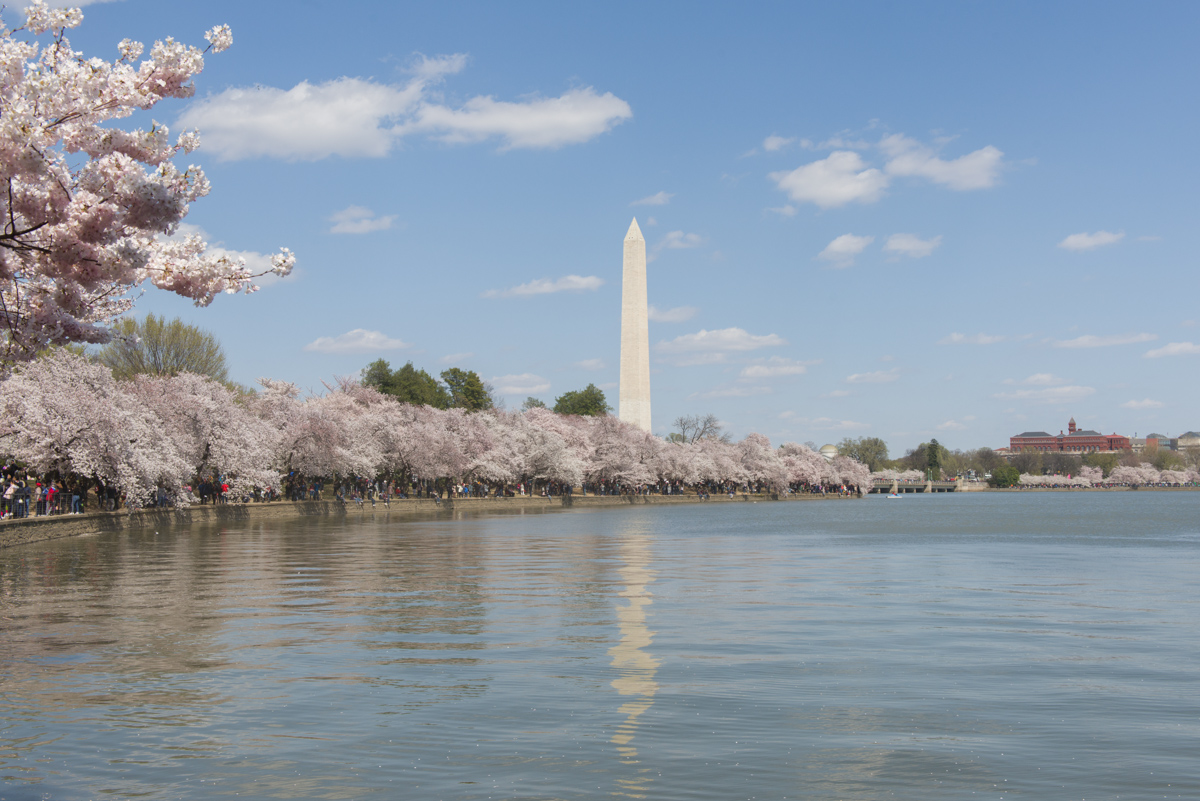
Picture of the Washington Monument in Washington DC with cherry blossoms

Please Note: My blog posts may contain affiliate links! If you make a purchase through one of these links you won’t pay a penny more, but I will get a small commission to help keep the lights on. Thank you for your support!

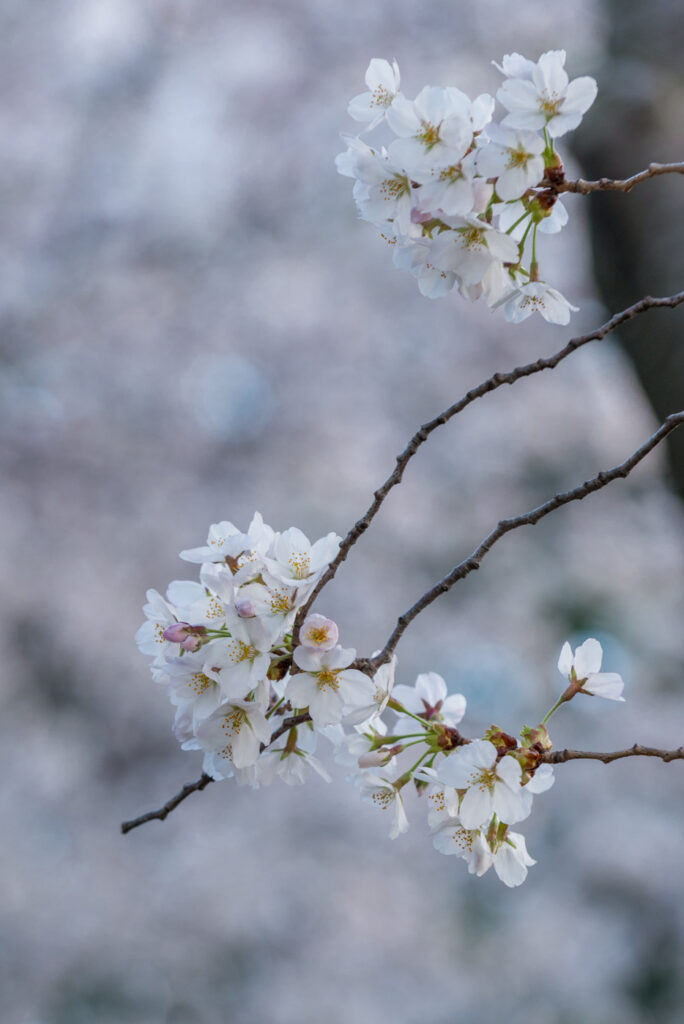
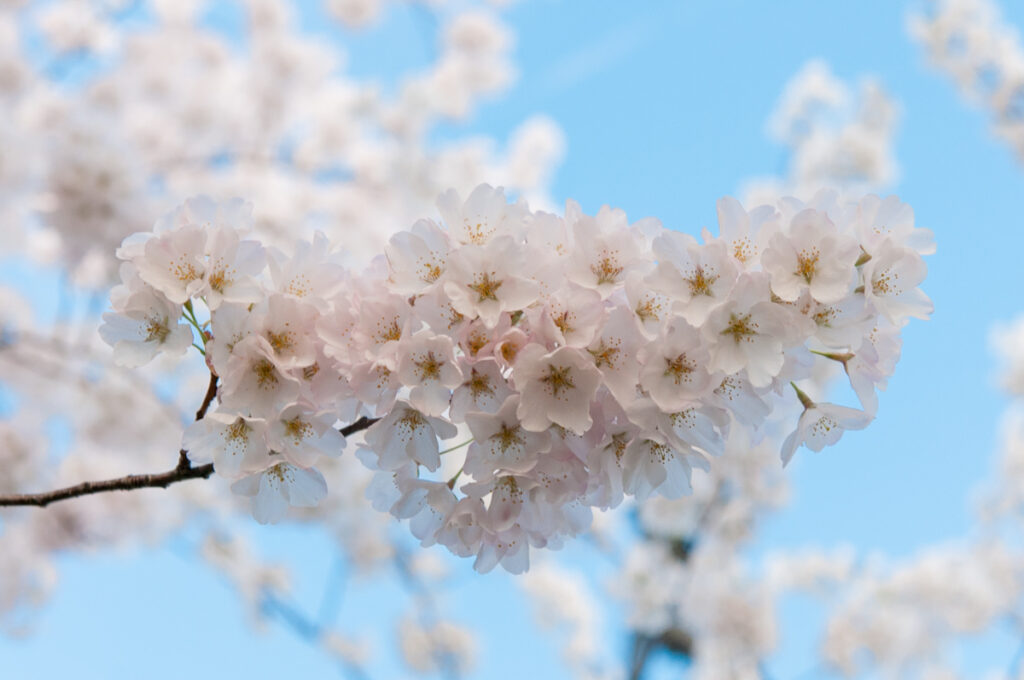
Close up photo of a tree branch with cherry blossoms

With the arrival of spring here in the Washington, DC area comes a flurry of delicate pink cherry blossoms erupting across the region, signaling the end of the winter and threats of any snowmaggedons. But did you know there’s a whole tradition surrounding the arrival of the cherry blossoms? Hanami, which literally means “flower viewing”, is a Japanese custom that celebrates the arrival of spring. Dating back over a thousand years, hanami celebrates the fleeting beauty of cherry blossoms–known as sakura in Japanese. Each spring in Japan, parks are filled with thousands of people enjoying picnics with friends and family underneath cherry blossom trees as they appreciate the fleeting beauty of the sakura. Luckily for us (and our wallets!), we can take part in this yearly tradition a little closer to home!

A Brief History of the National Cherry Blossom Festival

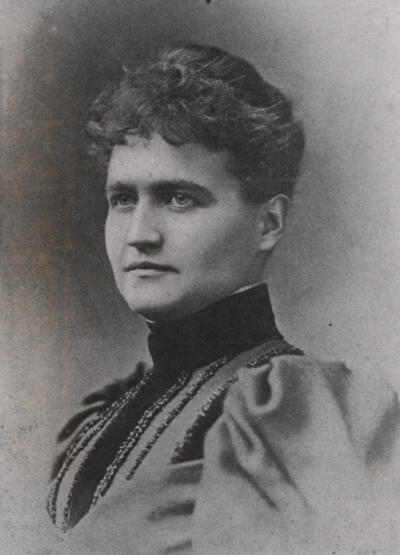
The idea of planting cherry blossom trees in Washington, DC came from an unlikely but very determined individual by the name of Eliza Ruhamah Scidmore. Born into a family of adventurers in 1856, she was bitten by the travel bug early in life and did whatever she could to continue seeing new, far-flung places. She began her career writing society pieces for newspapers around the country in order to earn money for her far-flung travels. In 1883 she traveled to Alaska for the first time, documenting her travels in a series of articles which were published by many top newspapers and magazines of the day. In 1885 she traveled to Japan for the first time to visit her brother George worked for the US Consular Service. While there she developed a deep appreciation for people of Japan, their customs and the flowering cherry blossom trees.

Shortly after her return to the United States she began a nearly decade-long pursuit to bring cherry blossom trees to the American people. She presented her idea to every  Superintendent of Public Buildings and Grounds, but her pleas were met with little interest. Finally, in 1909 her idea began to…well…blossom. In 9106 David Fairchild, an official with the Department of Agriculture, began experimenting with the introduction of Japanese flowering cherry trees in the United States. He had imported trees to Japan and replanted them with success. He then began his own 

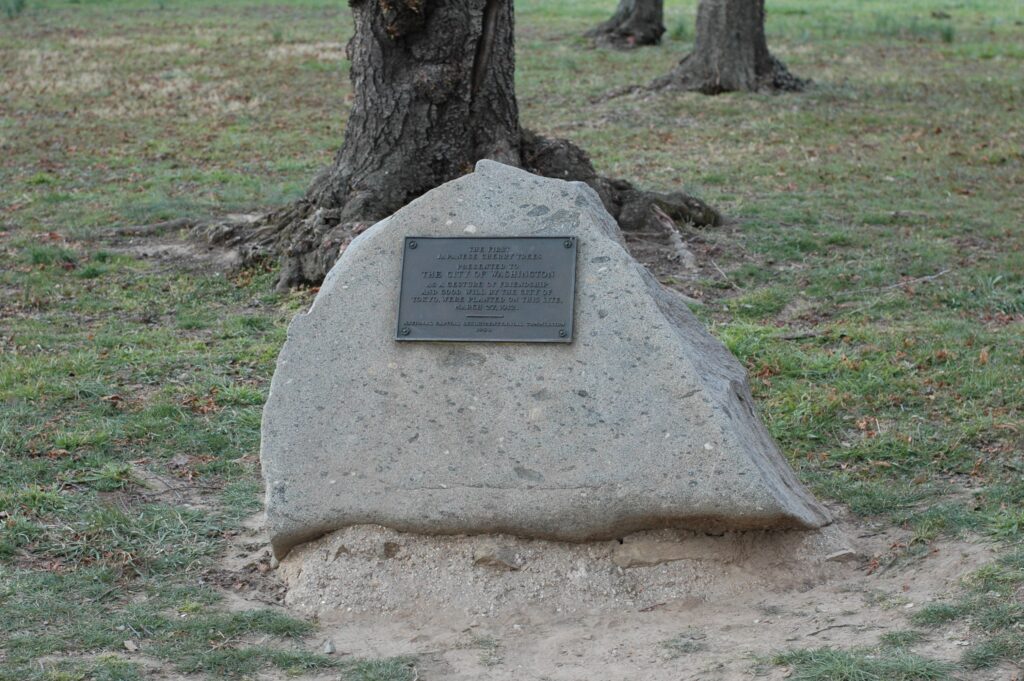
campaign to have cherry blossom trees planted along the more prominent streets of Washington, DC. Eliza caught wind of his attempts and decided to just raise the money herself to purchase the cherry blossom trees and donate them to the city. In April of 1909 Eliza sent a letter to First Lady Taft, requesting her approval for the plan and assistance in acquiring the trees. Two days later Eliza received a positive response from Mrs. Taft and plans got underway for planting the first cherry blossom trees in Washington, DC. On March 27, 1912, first lady Helen Taft and Viscountess Chinda, wife of the Japanese Ambassador, planted two cherry trees on the northern bank of the Tidal Basin. A bronze plaque commemorates those two trees that still bloom today. 

A plaque commemorating the first cherry blossom trees planted in 1912 by Mrs. Helen Taft

After three more years of planning (and an awkward situation where the first gift of trees from the mayor of Tokyo had to be burned because they were full of insects), a second gift of 3,000 trees from Japan were successfully planted along the Tidal Basin and in other areas of Potomac Park and the city. Out of these trees less than 100 still bloom today. If you’d like to read more about Eliza I recommend this biography I read a few years ago: Eliza Scidmore: The Trailblazing Journalist Behind Washington’s Cherry Trees. If you’d like to learn more about the history of the effort to bring cherry blossom trees to Washington, DC I recommend reading: Mrs. Taft Plants a Tree: How the Cherry Blossoms Came to Washington (on Kindle only). 

The National Cherry Blossom Festival Today

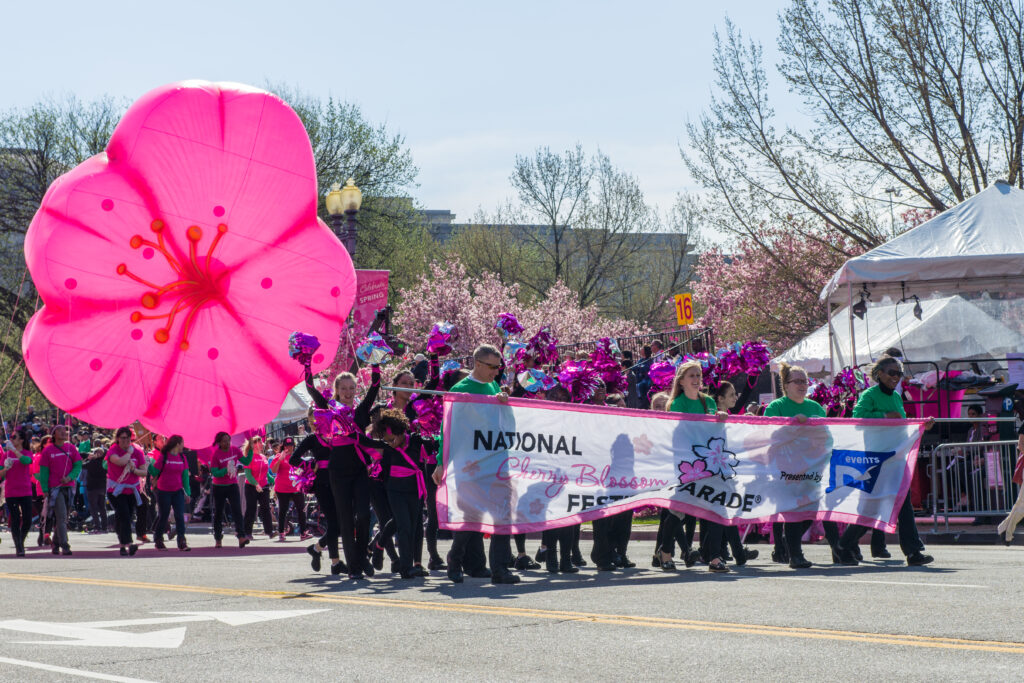
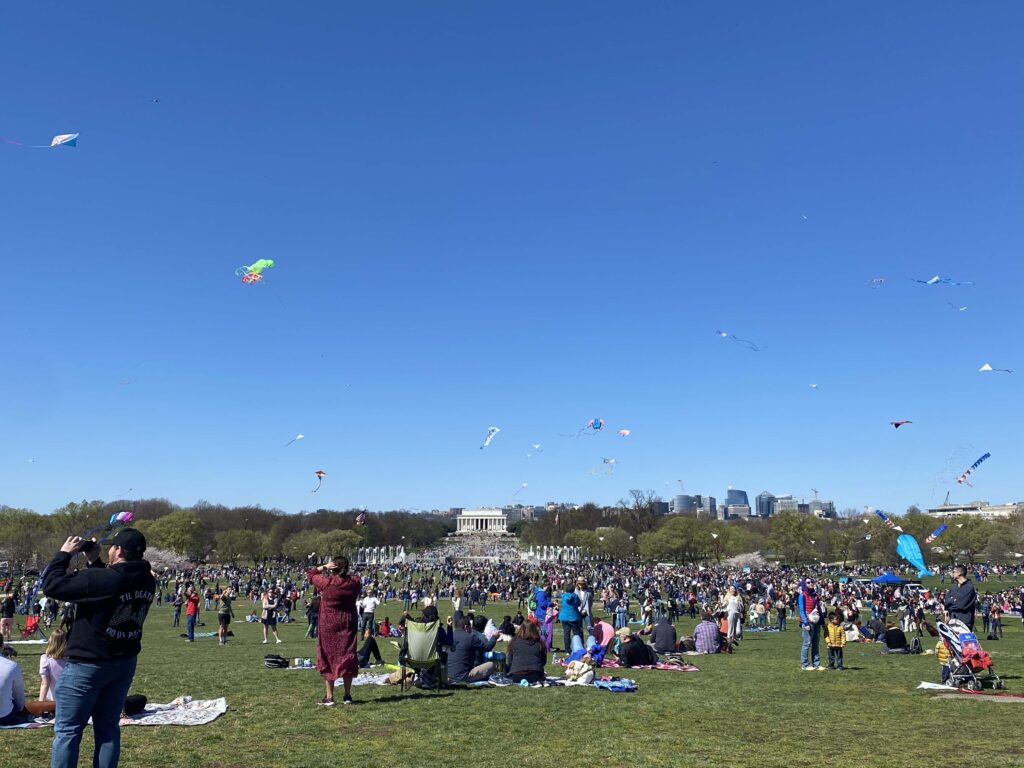
The National Cherry Blossom Festival in Washington, DC pays homage to the gift of 3,000 cherry blossom trees given by Japan to the United States in 1912 as a symbol of friendship between the two countries. What began as a simple three-day festival in 1935 has turned into a nearly month-long family-friendly celebration that attracts visitors from all over the world. This year the festival takes place March 20 to April 12, 2026 and among the many exciting events are the opening ceremony, the yearly kite festival around the Washington Monument, and a parade (that Emma one took part in!) that runs approximately ten blocks down Constitution Avenue NW. Throughout the festival are also special musical performances, art exhibits and craft festivals held during the week.

Throughout the cherry blossom festival restaurants and bars around the Washington, DC area join in on the fun and offer themed drinks and food!

When Can You See the Cherry Blossoms?

Cherry blossoms are notoriously fickle and here in the Washington DC area we can begin seeing anytime between mid-March to mid-April. The exact dates of peak bloom (when 70% of the blooms open on the trees) vary a bit from year to year depending on weather. While not all cherry blossom trees bloom at the same time, there is one tree in particular that reliably blooms about ten days ahead of the others and has become affectionately referred to as the indicator tree. The National Park Service monitors bud development and provides updates to the public on their website and social media accounts. For 2026 they predict peak bloom will be March 29 – April 1. Another website I like to watch for daily peak bloom updates is Cherry Blossom Watch

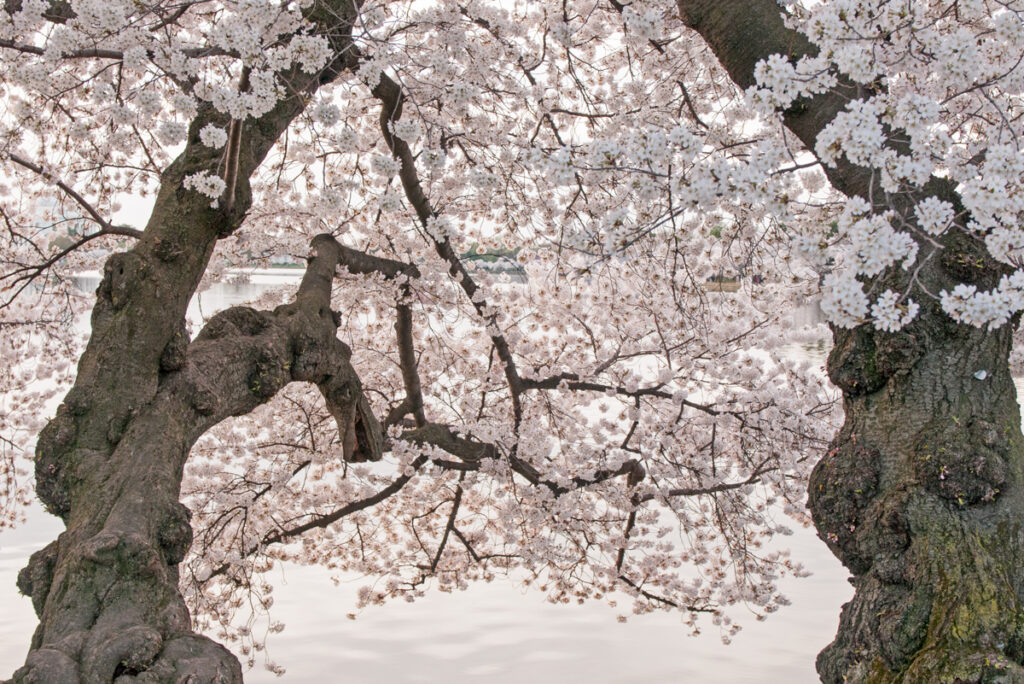
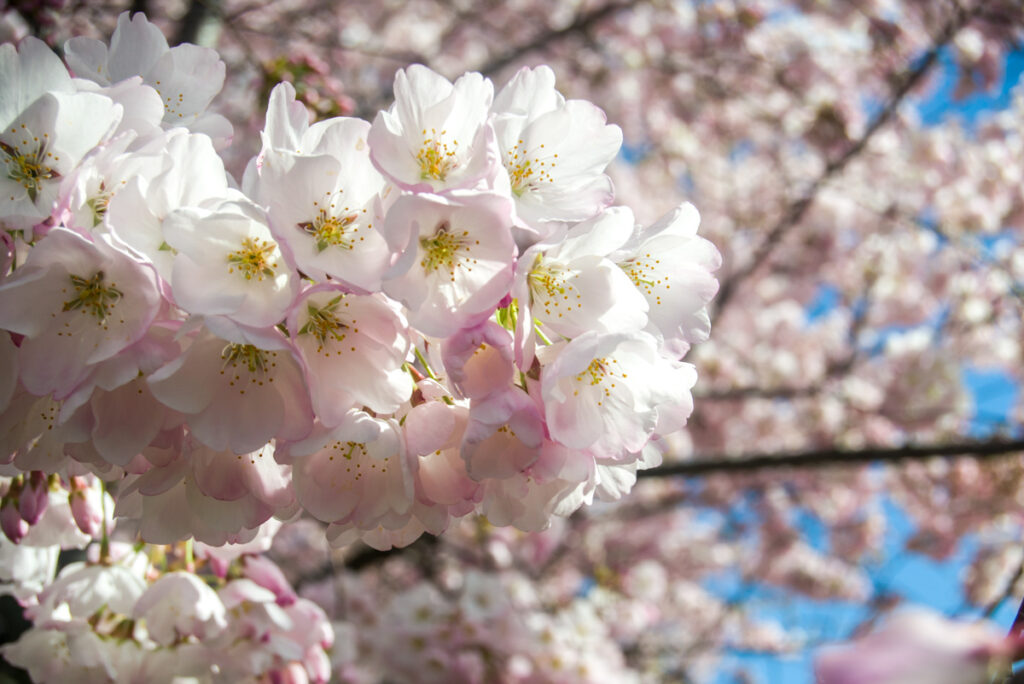
Close up photograph of cherry blossoms

Where Can You See the Cherry Blossoms?

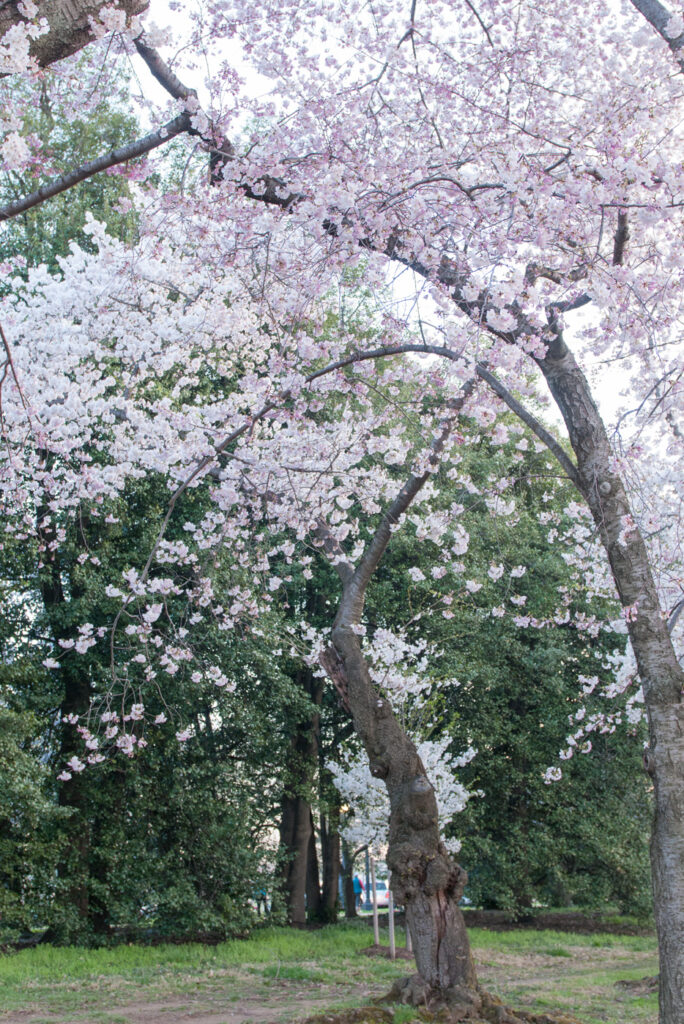
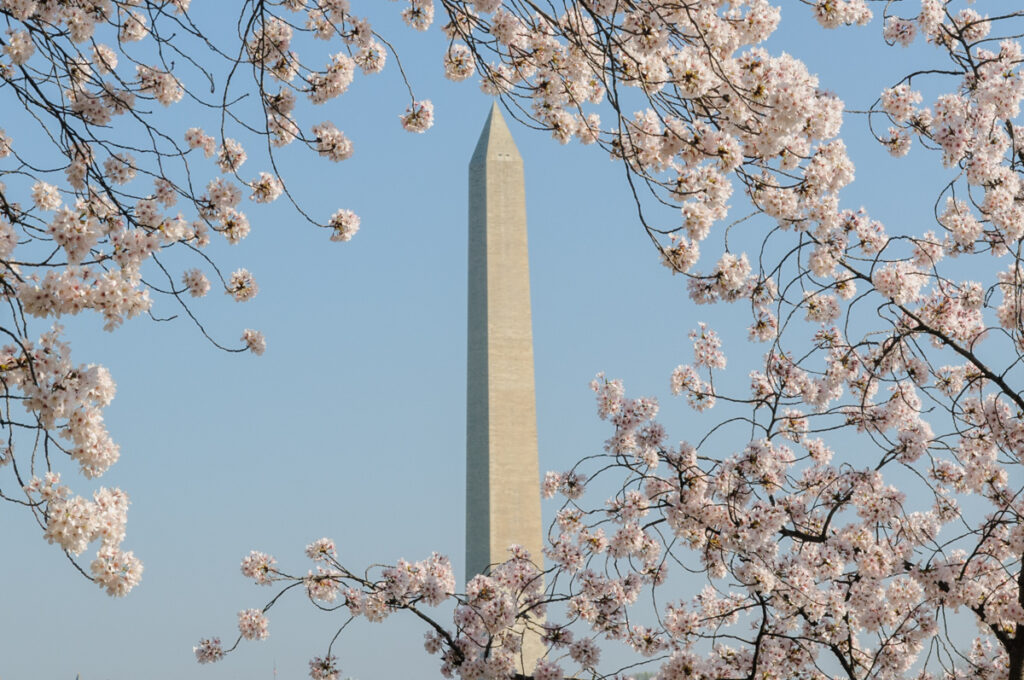
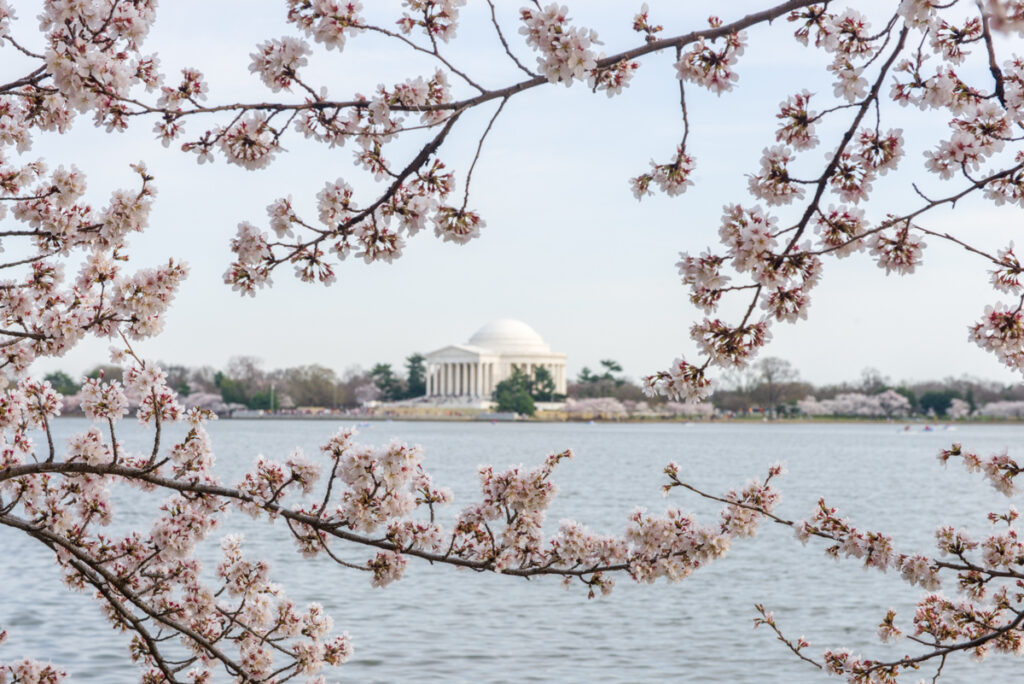
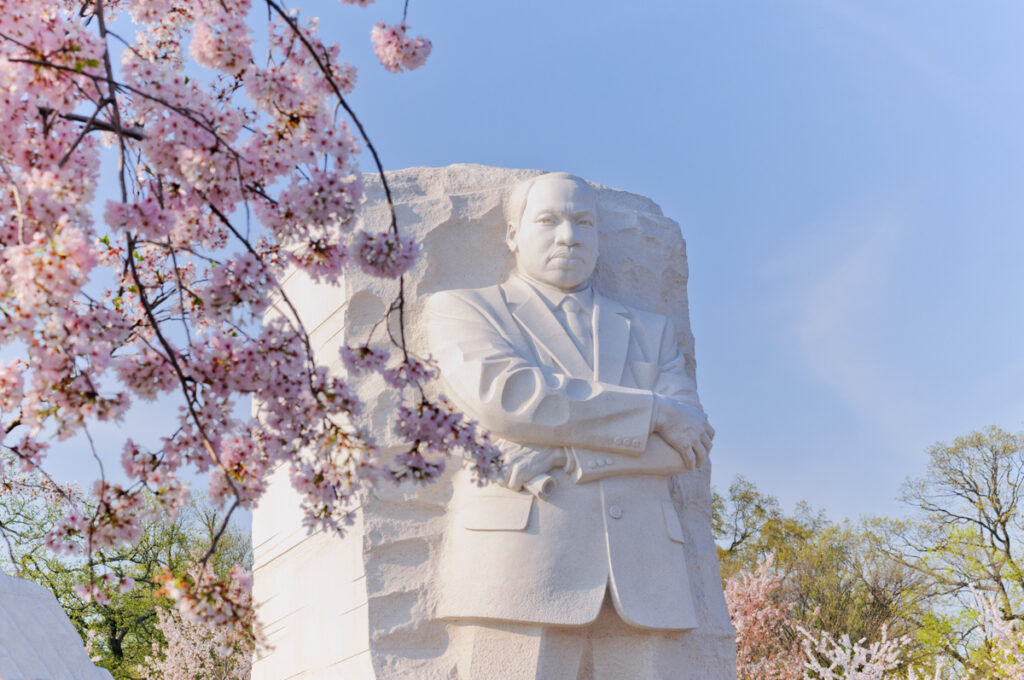
If you want the classic cherry blossom experience, the Tidal Basin in Washington, DC is the place to be for that. The basin is encircled by thousands of cherry blossom trees including some of the remaining original trees gifted by Japan. There is a nearly two-mile path around the Tidal Basin, and a leisurely stroll along the path will give you plenty of opportunities to photograph the trees from a distance, up close and with their reflections in the water. It also provides a great opportunity to photograph the cherry blossoms with famous landmarks in the background such as the Jefferson Memorial, Washington Memorial and Martin Luther King Memorial. Along the way you will also see the Japanese Pagoda and Japanese Lantern, both gifts from Japan. And don’t forget to take a paddle boat ride to get a truly unique experience!

Washington Memorial in Washington DC framed by cherry blossoms
Jefferson Memorial in Washington DC framed with cherry blossoms

Keep in mind that there is some construction this year around the Tidal Basin between the Jefferson and Franklin D Roosevelt Memorials so you will not be able to walk around the entire basin. There are also cherry trees planted around the Washington Monument (especially on the southern and eastern sides), so if you’re at the Tidal Basin it’s an easy walk over to see these. This is also a great place to have a picnic as there aren’t as many people walking about.

A few suggestions before you go

  •  Follow the Cherry Blossom Watch and National Weather Service Bloom Watch websites for the most up-to-date peak bloom dates
  • Try to avoid Washington, DC on the weekends. The weekdays offer fewer crowds.
  • Be prepared to walk – and wear comfortable shoes!
  • Bring your own food. There are food trucks lined up along the National Mall, but they are pricy. And it’s quite a treat to picnic under the blooms!
  • Be patient! If you go during a peak time, you’ll have to wait in lines for food (unless you bring your own), restrooms, the metro…even getting that perfect picture. 
  • There are no public bathrooms around the basin, but there will be portable toilets stationed around the area.

Views Beyond the Tidal Basin

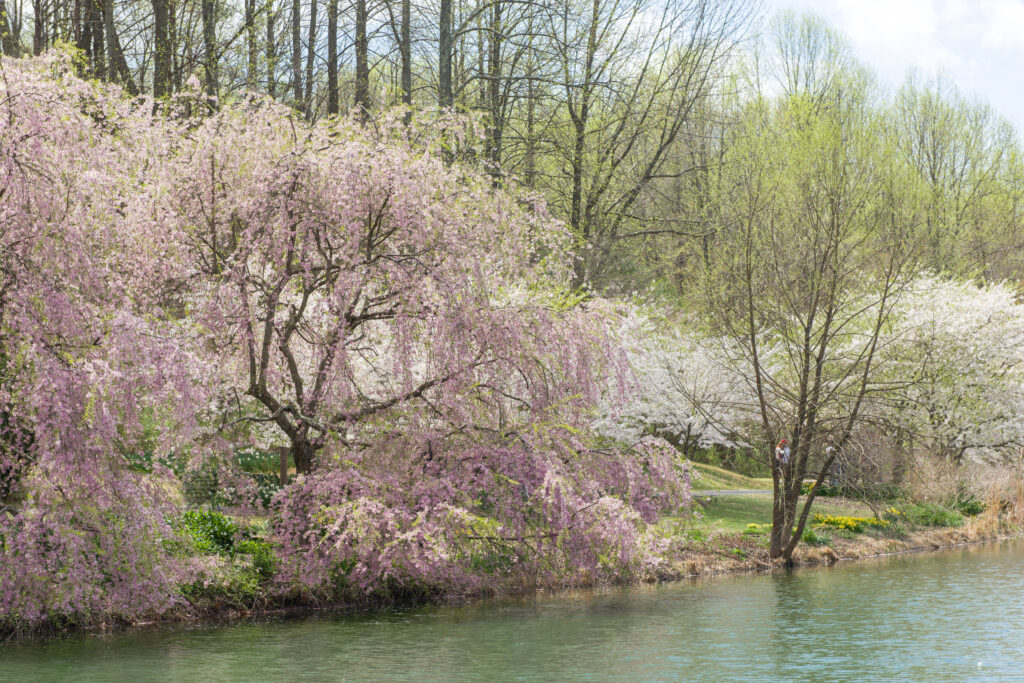
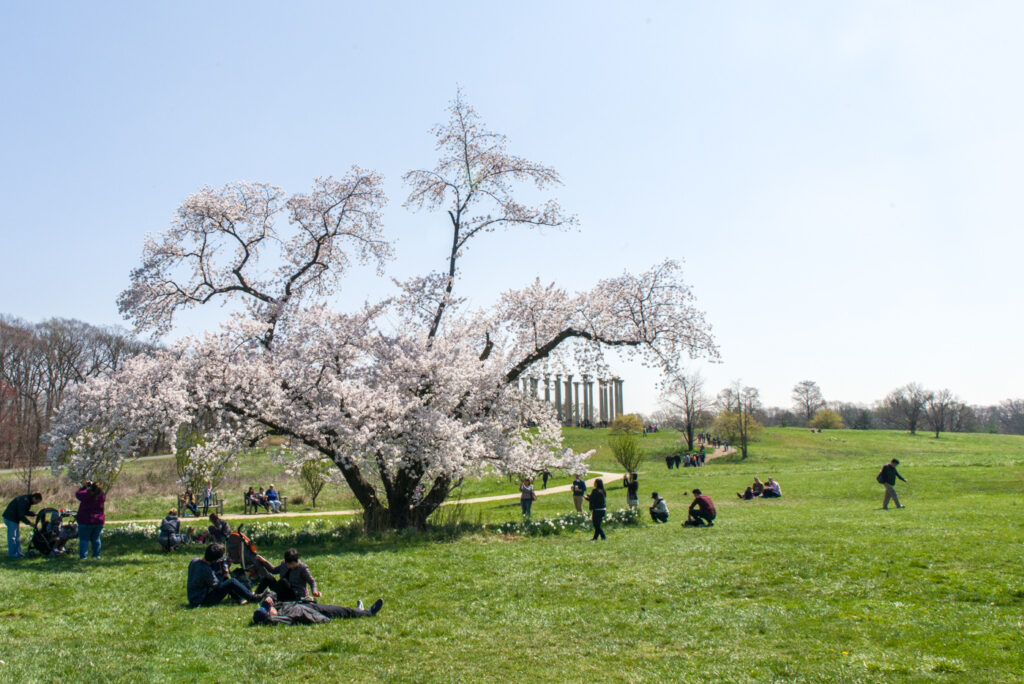
If you’d rather not go all the way into Washington, DC (and fight all the crowds) to see the cherry blossoms there are several other unique gardens to see them. In Meadowlark Gardens located in Vienna, Virginia, you can view weeping willow cherry blossom trees and their reflections around Lake Caroline. While Meadowlark does not have near as many cherry blossom trees as the Tidal Basin, they are still just as beautiful and with less crowds offer a much more tranquil experience. Located in northeast Washington, D.C., about a half hour drive from the National Mall is the National Arboretum. The Arboretum has a three-mile, self-guided cherry blossom tour that you can walk, bike or drive around. There are ample of places to picnic here in the Arboretum, including around the famous National Capitol Columns. While at the Arboretum don’t forget to check out their other spring blooms and their world-famous bonsai garden and museum!

Looking for more things to do in Washington, DC?

Are you in Washington, DC for a trip and not sure what else to do, or a local looking for a new way to see the city? Consider checking out one of these other fun things to do!

You Might Also like reading

post a comment