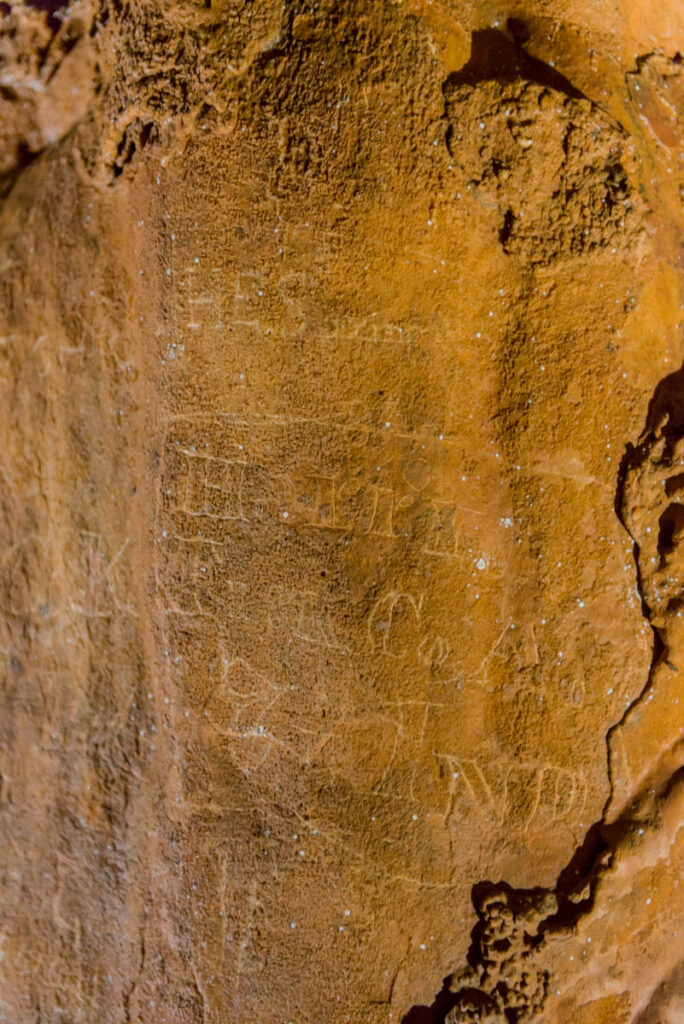
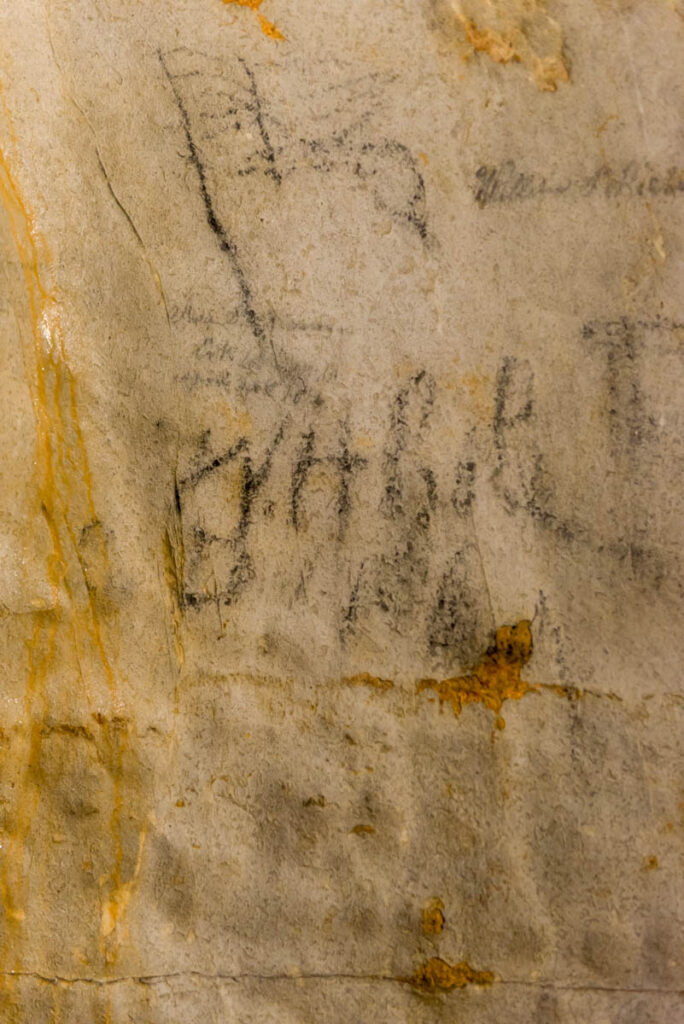
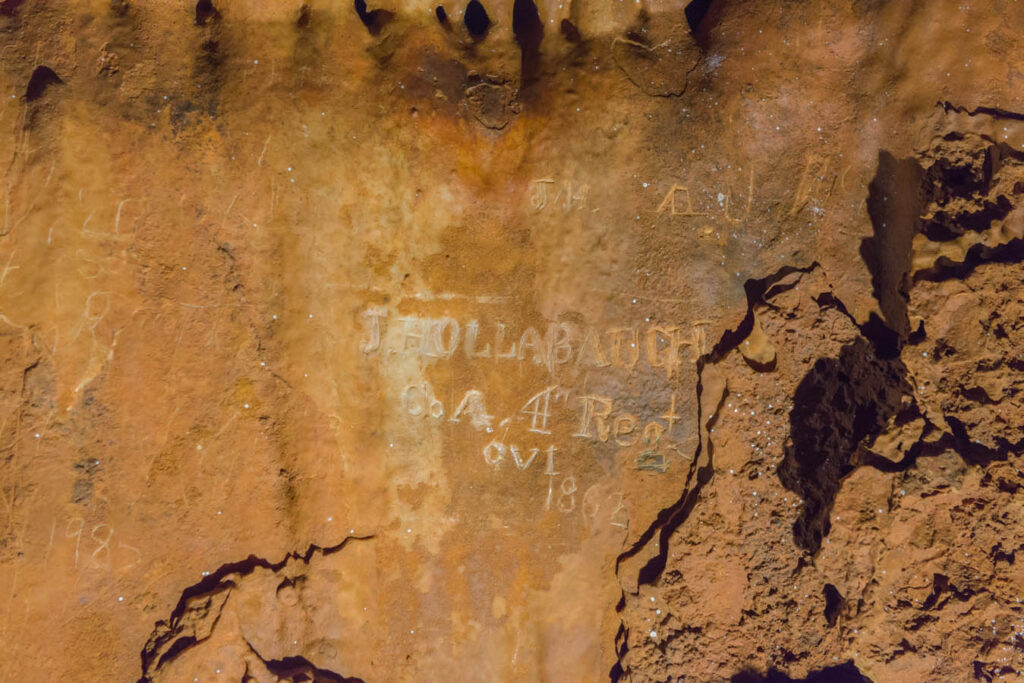
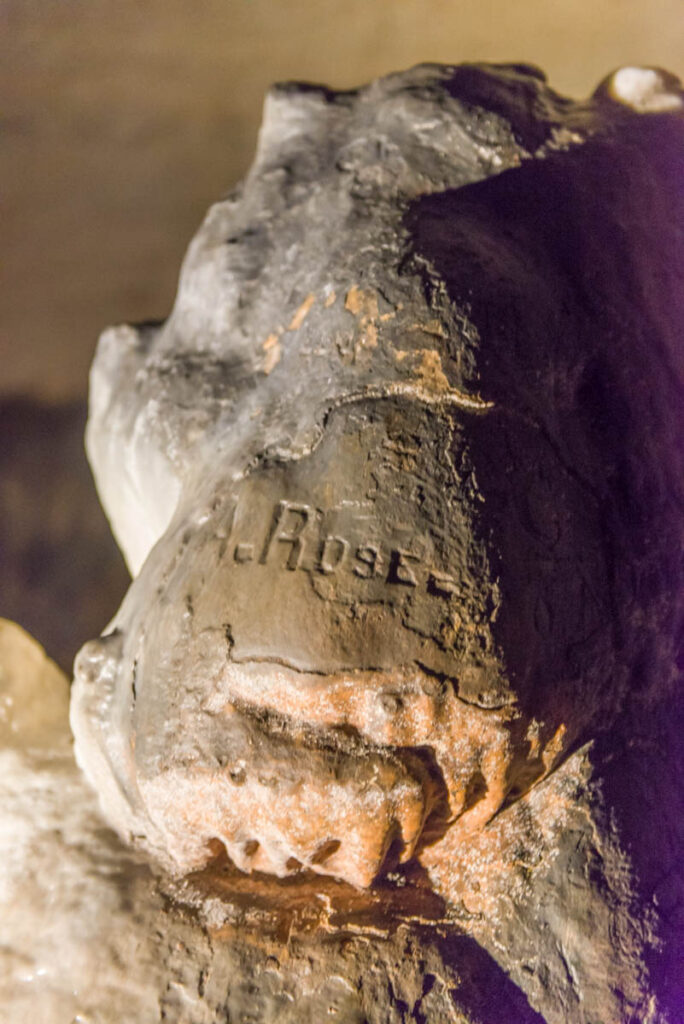
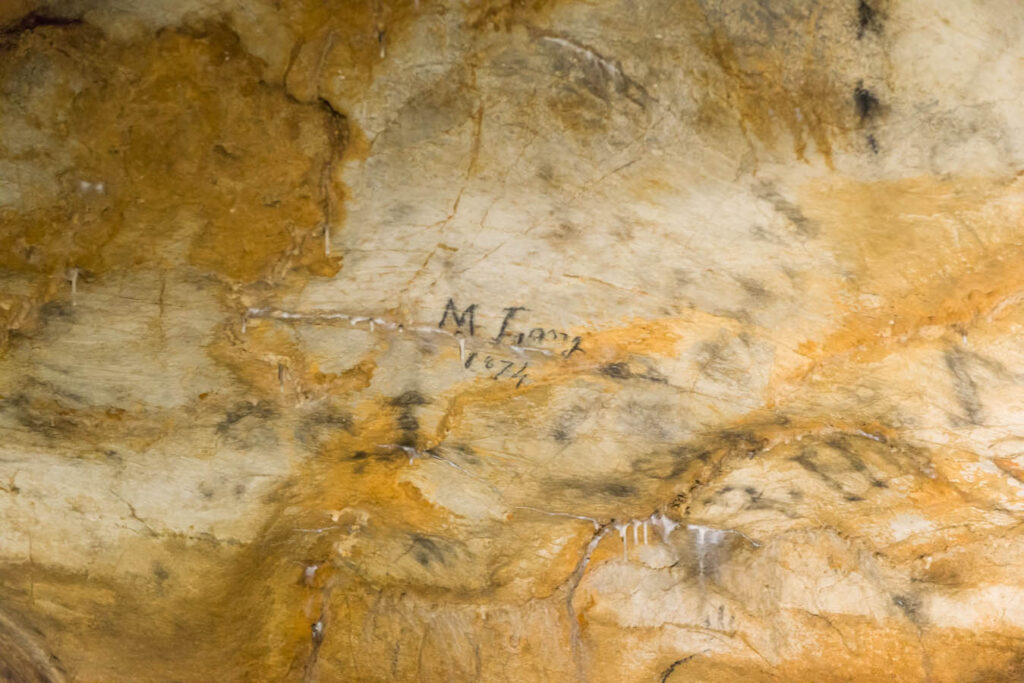
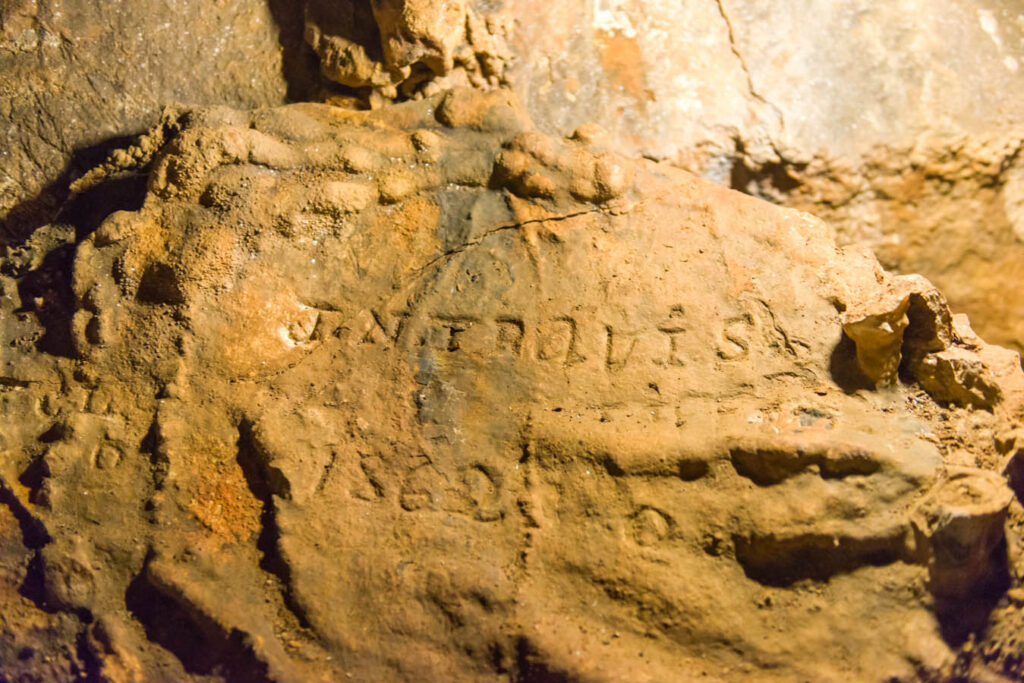
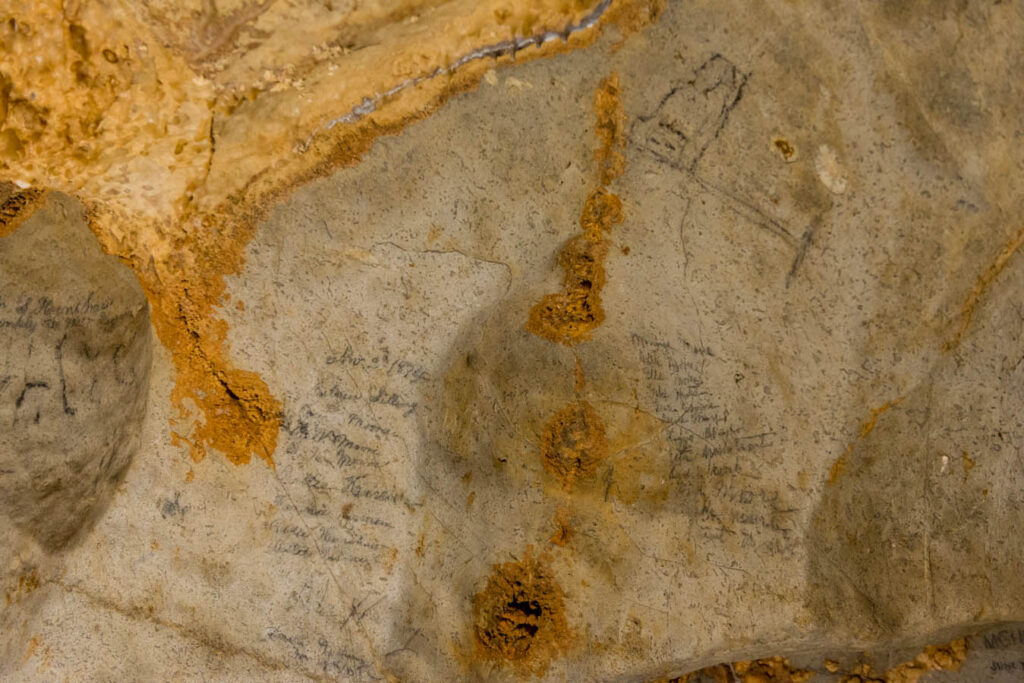
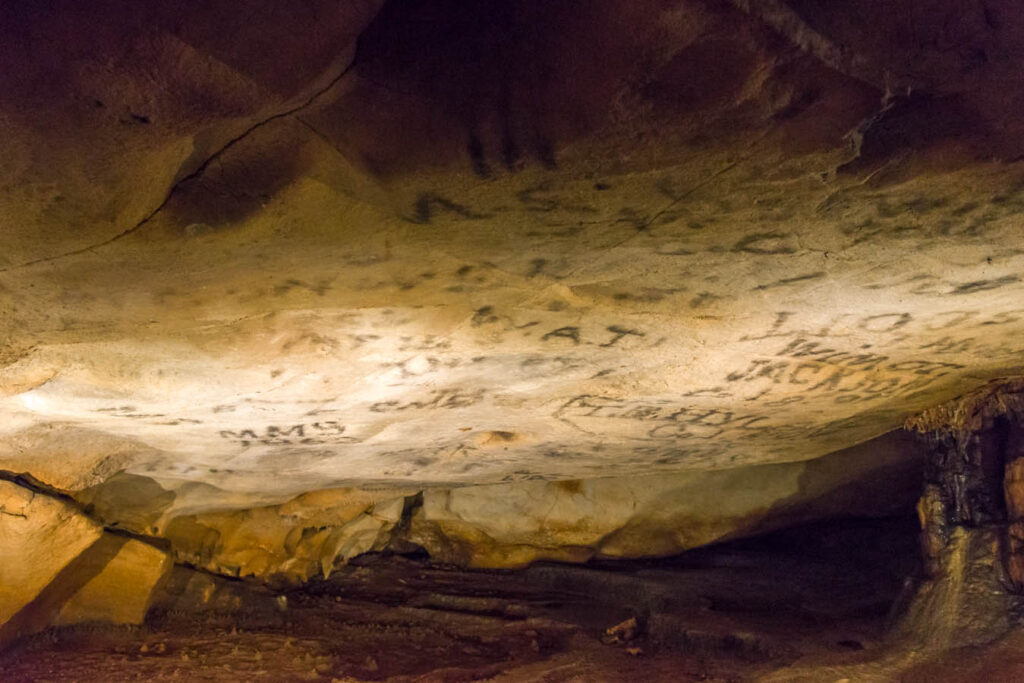
love visiting caves and caverns and have been to several throughout the Shenandoah Valley. I love learning about the geology of the caves and seeing the cool formations. Though the rock formations seen in Melrose Caverns are interesting and impressive (though maybe not as impressive as other caverns throughout the area), what makes this cavern unique is the history behind it. The caves were occupied at various times by both Union and Confederate soldiers during the Civil War and as mankind has done since the beginning of time, they left graffiti behind – their names carved in the cave walls with their bayonets, stamped or written in ash from their fires.
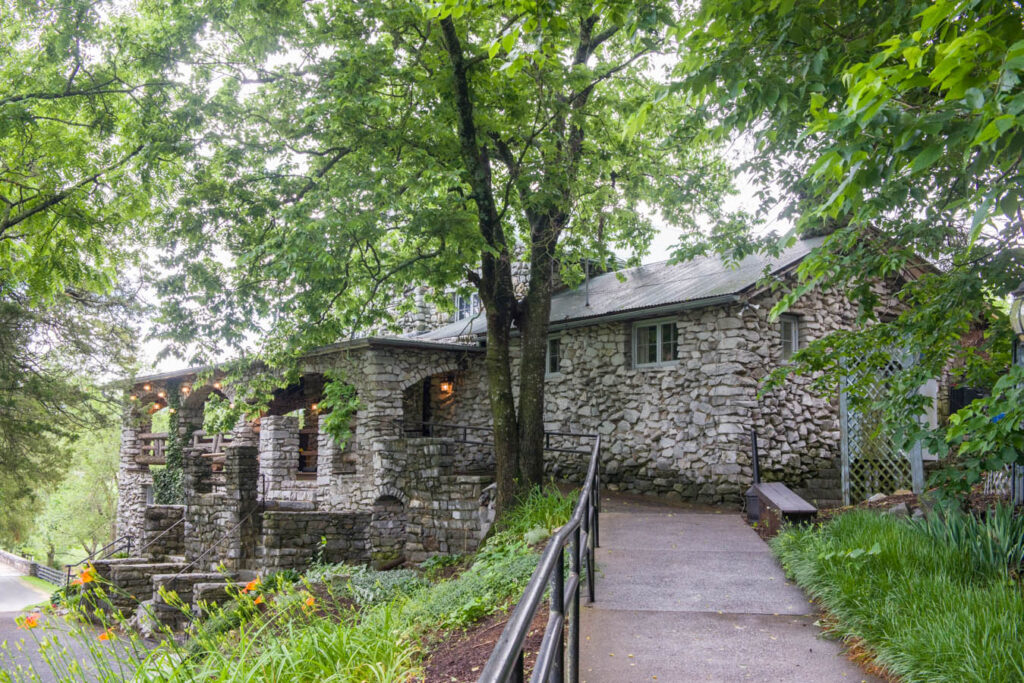
Melrose Caverns lies underneath the Harrison homestead, a parcel of land that traces back to a 1748 pre-revolutionary land grant awarded to the Harrison family from King George II. The caverns themselves were not discovered by the Harrison family until 1818 (but as you will discover later in a few paragraphs, the caverns were known to another group of people many years before). In the 1920’s Endless Caverns leased the caves from the Harrison family and opened Virginia Caverns to visitors. Over the years their name changed to Grottoes Caverns and then finally Melrose Caverns. Melrose Caverns ceased operations in 1967 due to lack of business after the completion of Interstate 81. A couple of decades went by and after a thorough restoration, the caverns were ready for reopening in 2020. Unfortunately COVID had other plans. It wasn’t until late 2021 that the caverns were officially (re)opened for business.
Which probably explains why I had never heard of them until a friend told me about them earlier this year. She and her daughters homeschool co-op went there for a field trip and afterwards she was like “oh my gosh, you have to go!” After looking at the photos she shared, I agreed! So when we had a free weekend, Peter and I made the 1.5 hour drive through the valley to the caverns. As it turned out we were the only ones on our tour that day, which was fantastic for us. Our tour guide, Matt, was great. We could tell he was a little nervous at first and didn’t know what to do. But after a few minutes he realized he didn’t have to be so formal with, so he relaxed and we had a really fun tour with him.
THE GEOLOGY OF MELROSE CAVERNS
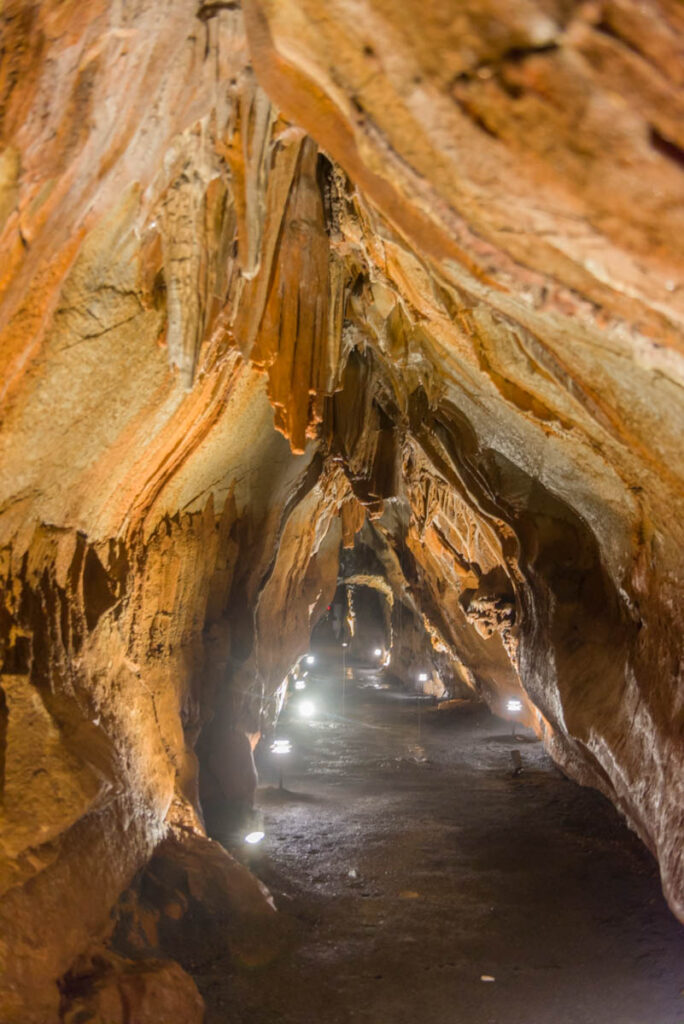
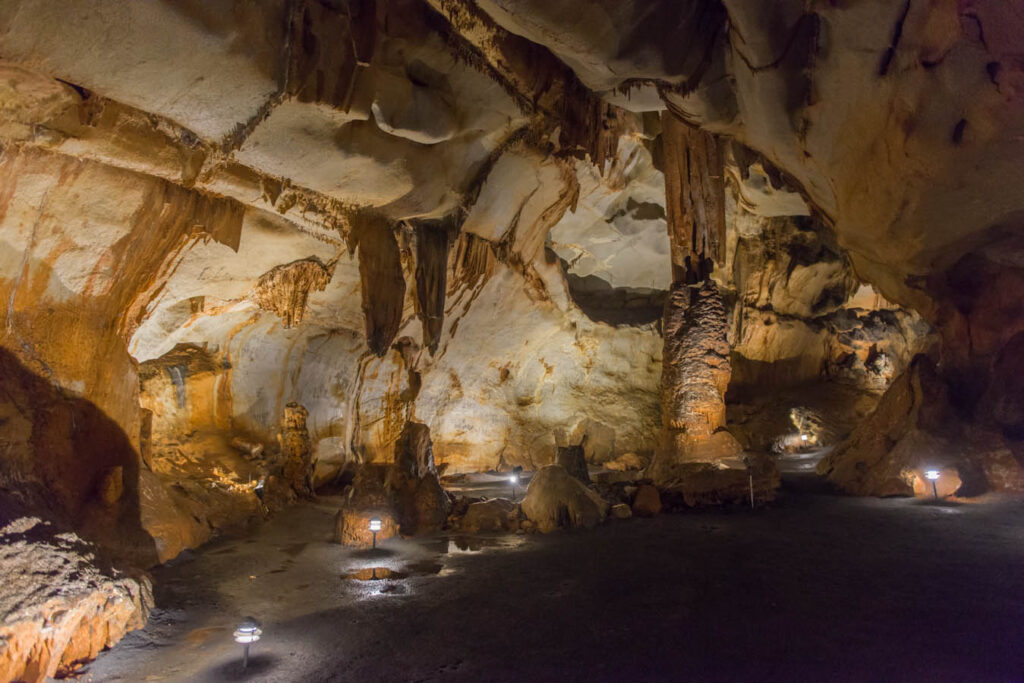
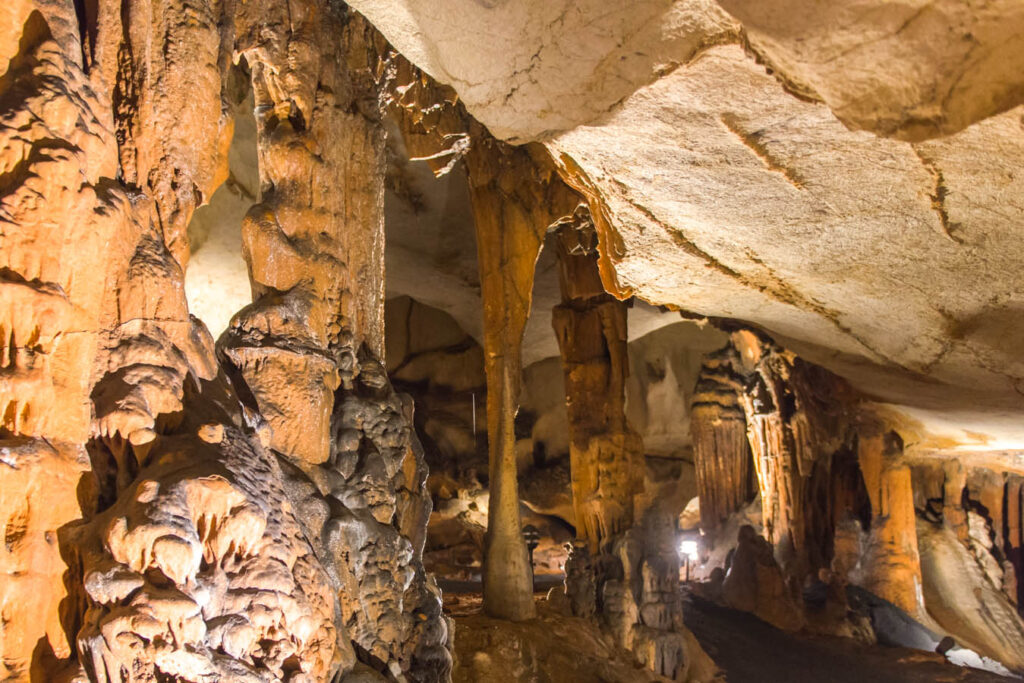
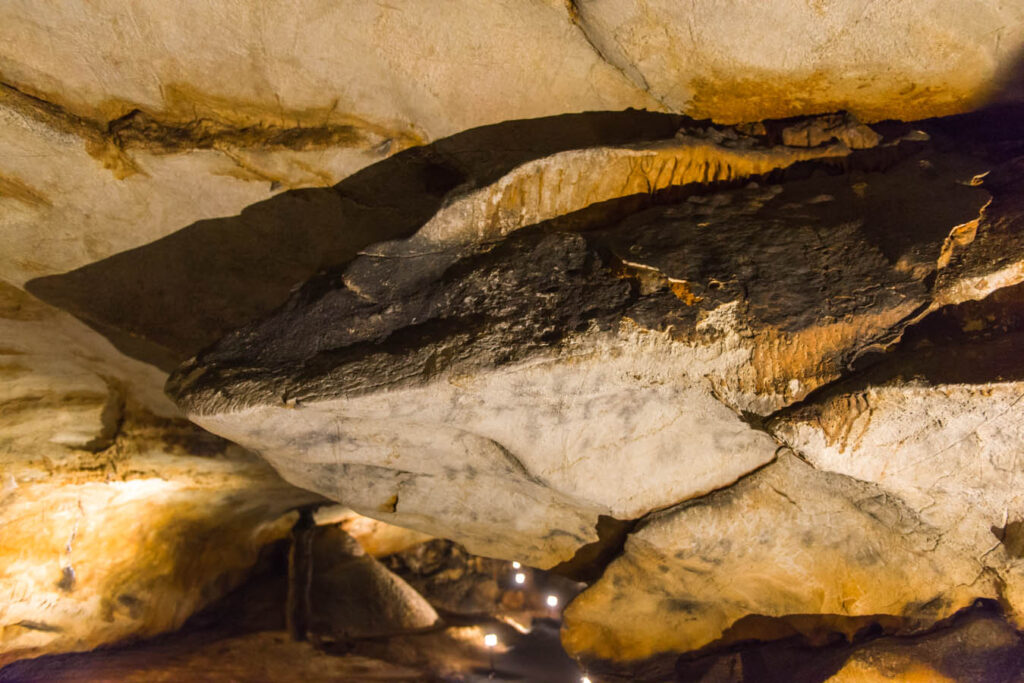
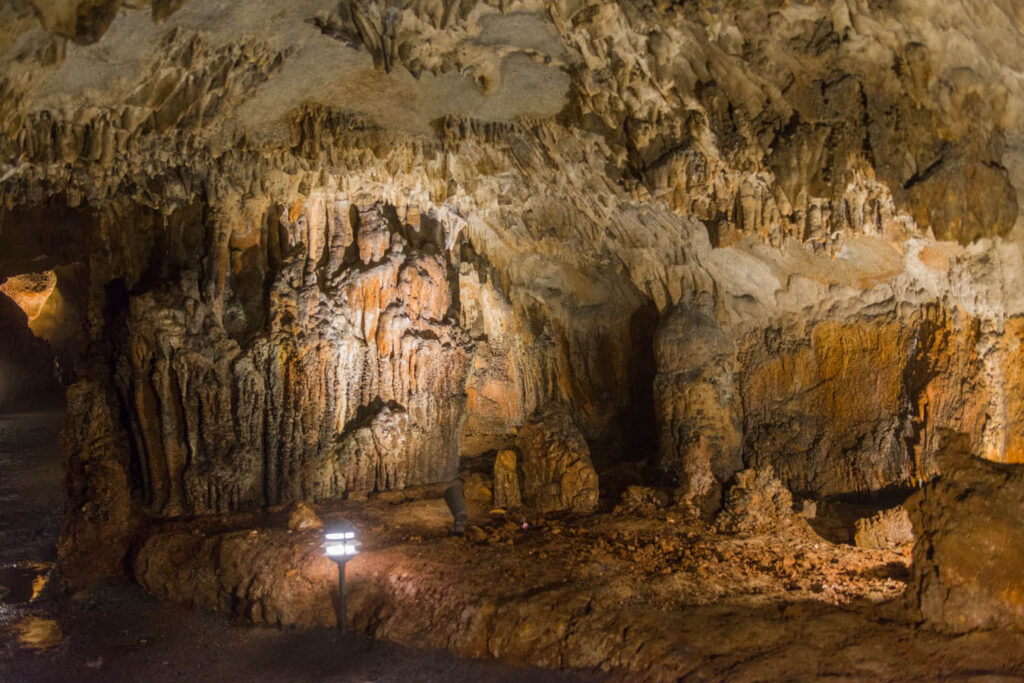
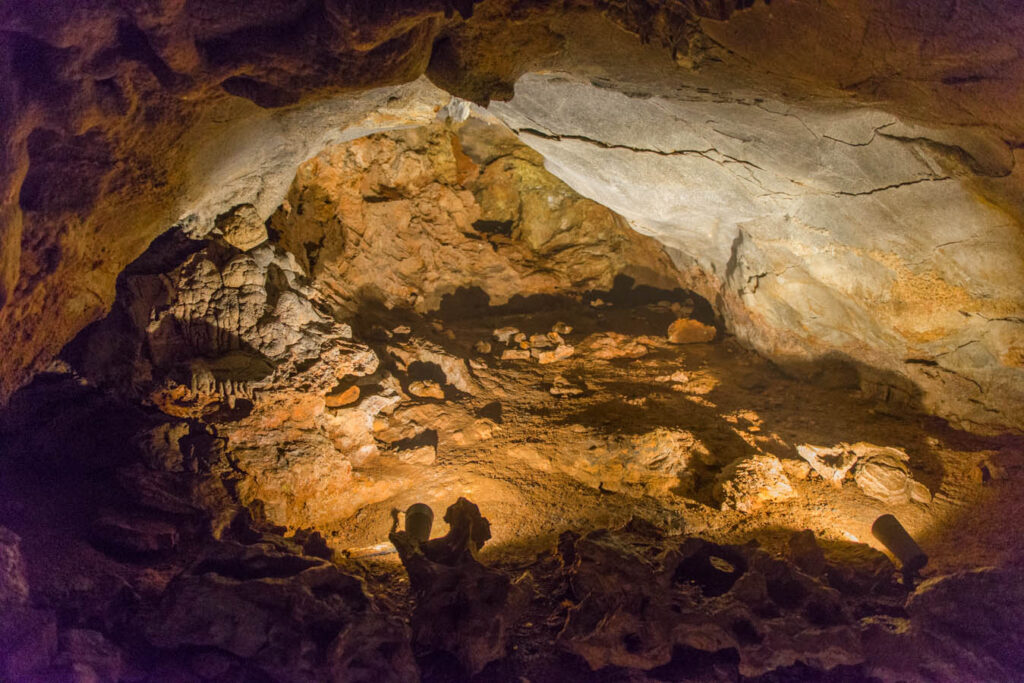
After walking through the brick entrance tunnel we walked through what is referred to as the Cathedral because the ceilings resemble the ceilings you see in gothic cathedrals.
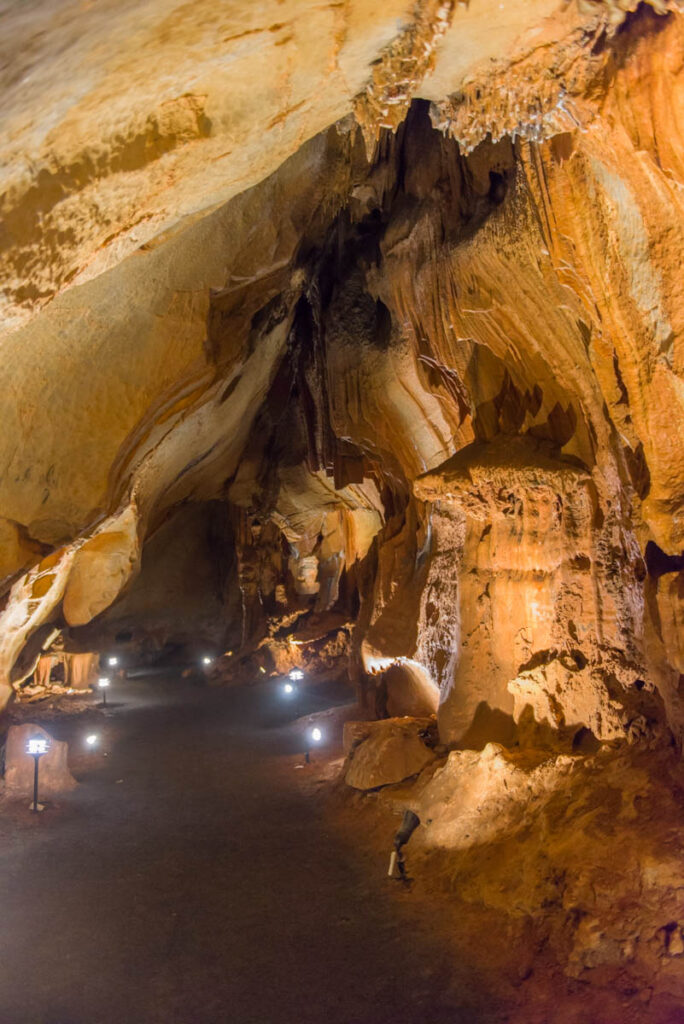
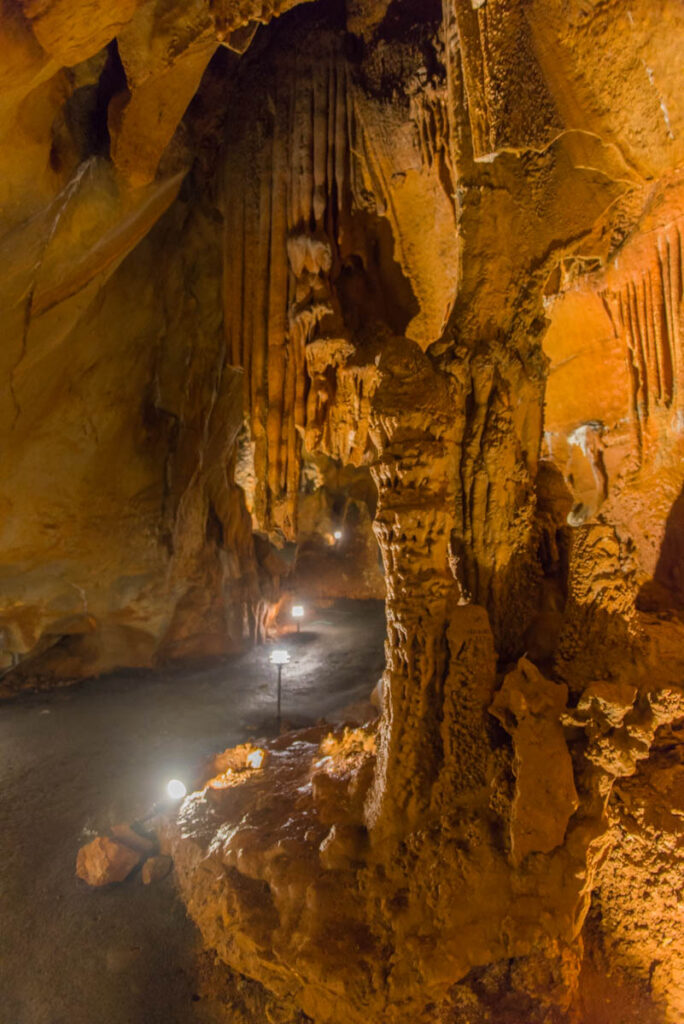
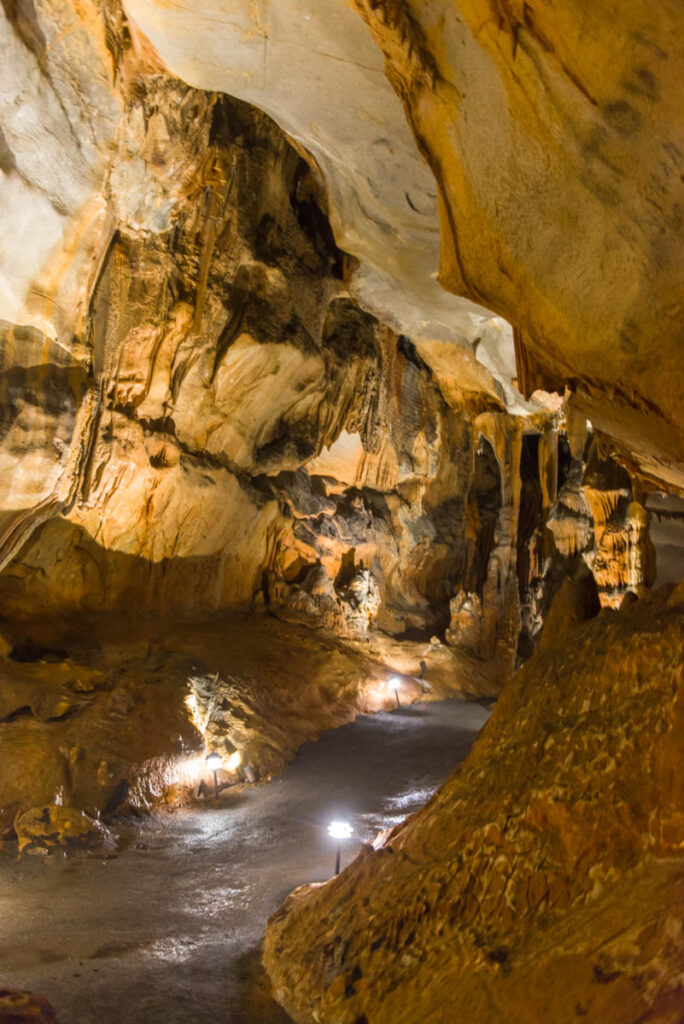
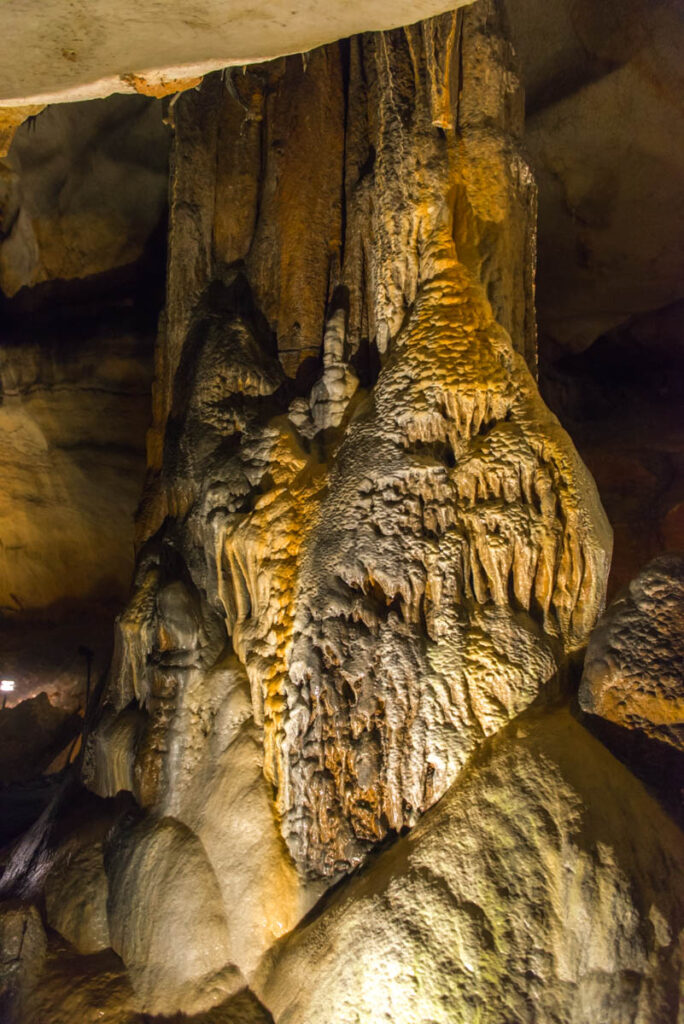
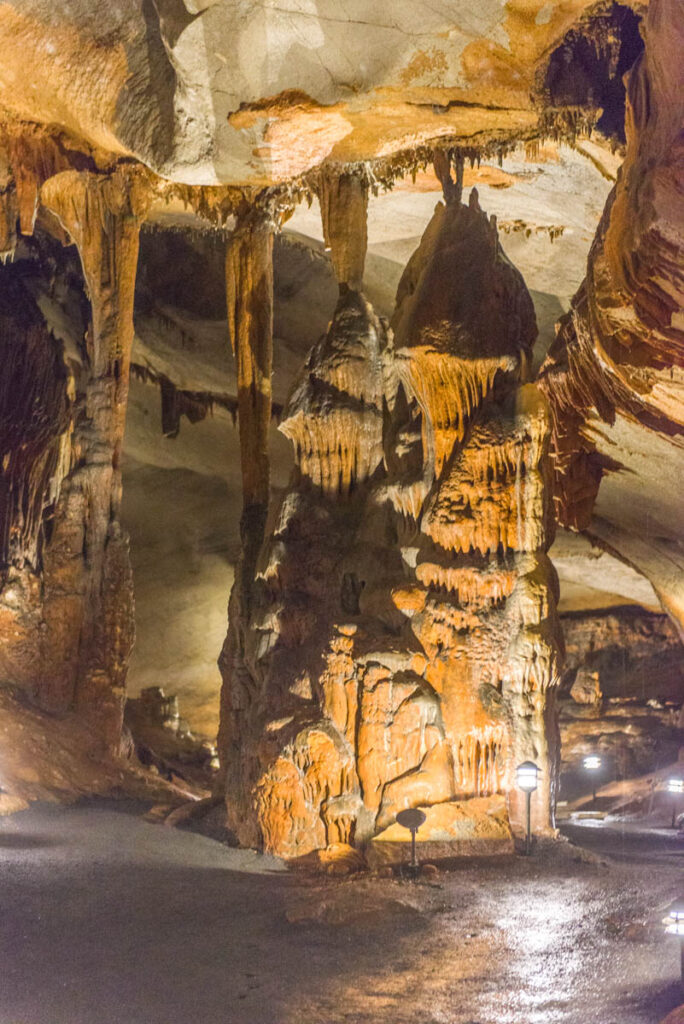
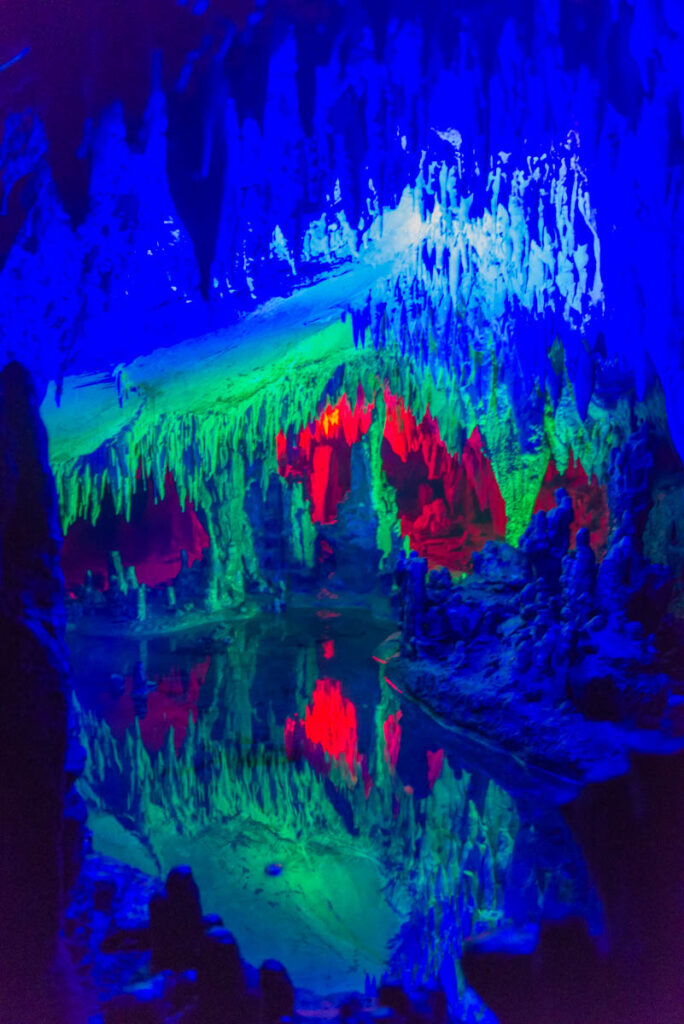
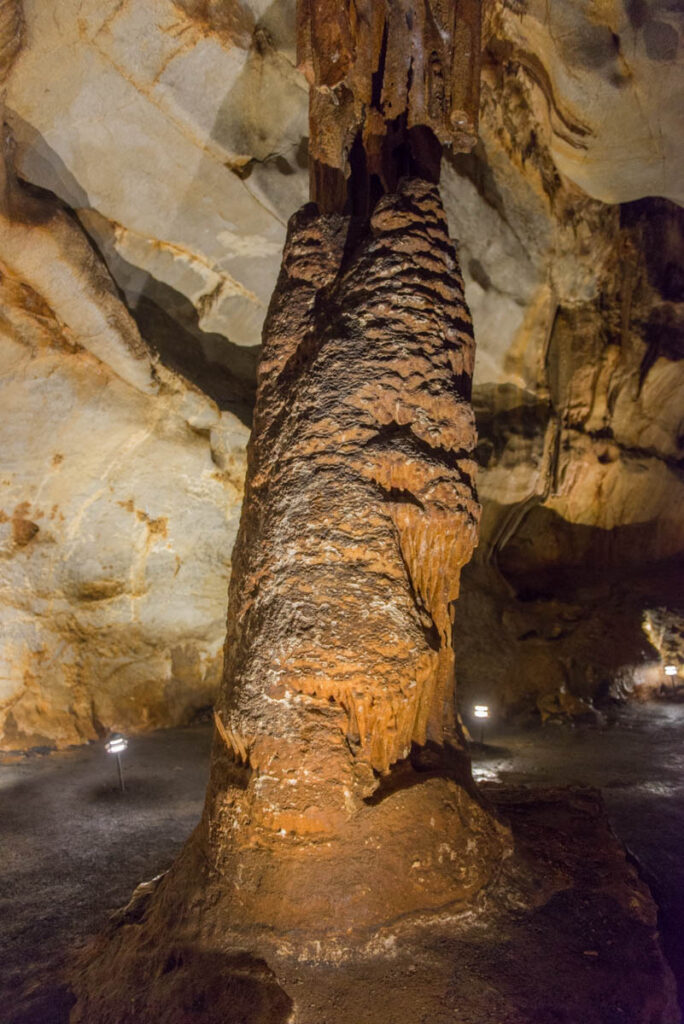
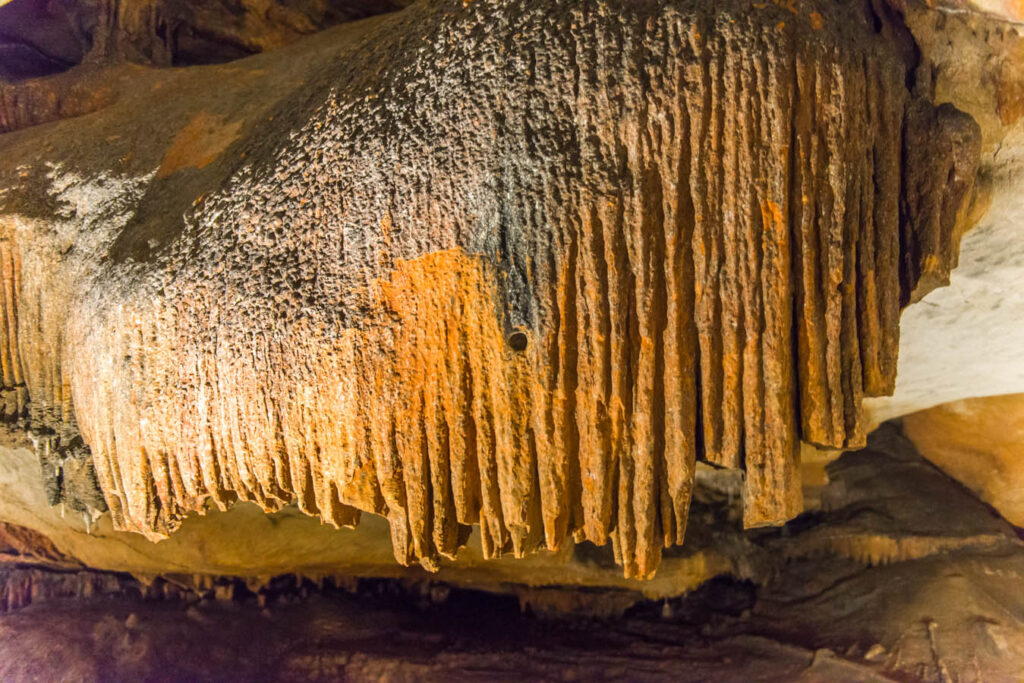
Melrose Caverns are a natural limestone cave system that formed over millions of years, and like most caverns it has its share of stalagmites, stalactites and other cool geological formations. As you walk through the caverns you will go through narrow passageways that open into soaring rooms and along the way come across the obligatory cave bacon and animal-shaped rock formations, an organ that can be played by hitting the “pipes” with a rock and a beautiful underground lake illuminated by colored lights.
My favorite rock animal was this one that looks like a gekco.
Now you’ll be forgiven if you see this one and don’t immediately think “wow, that looks like Jabba the Hutt and Princess Leia!”
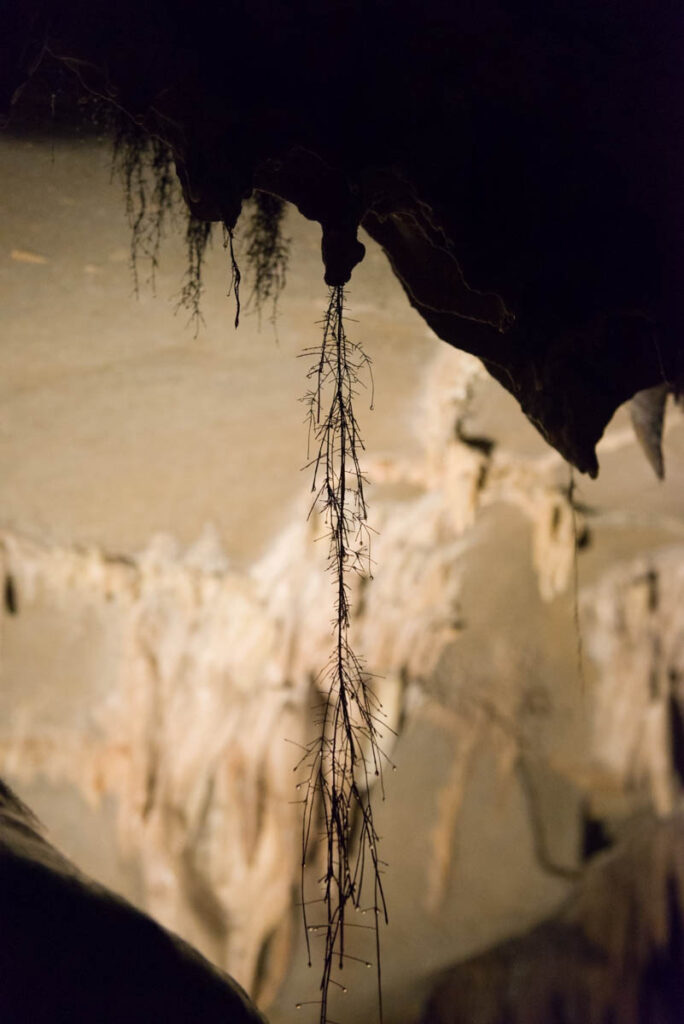
As you continue down the winding paths you will start to see thin, feathery vines draping down from the ceiling. In these areas the cavern ceilings are close enough to the surface of the ground for tree roots to make their way in through cracks in the rocks.
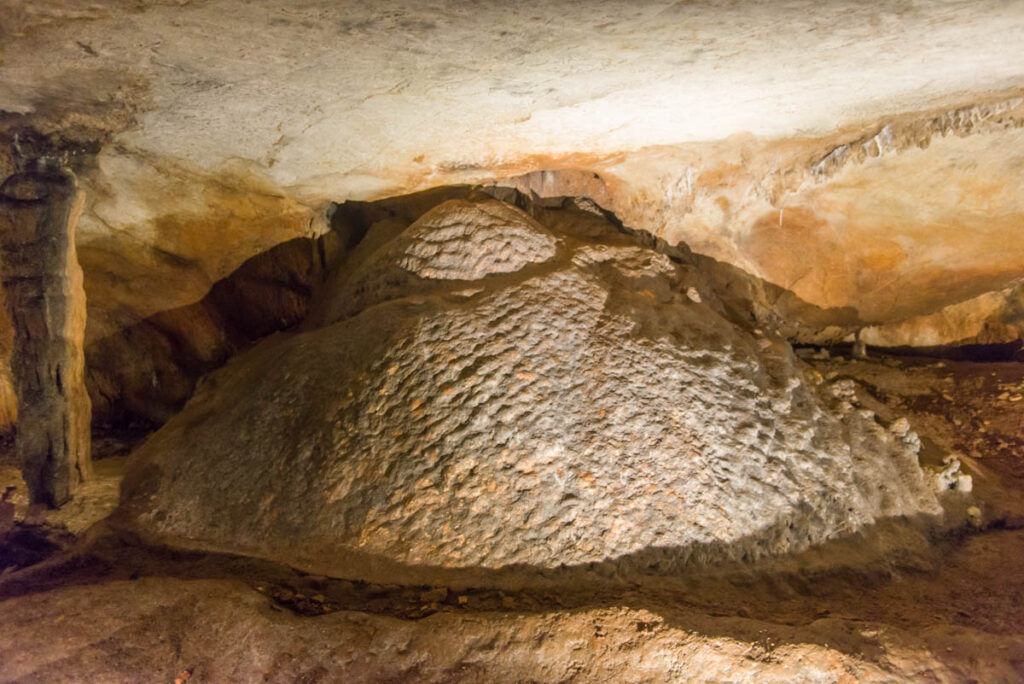
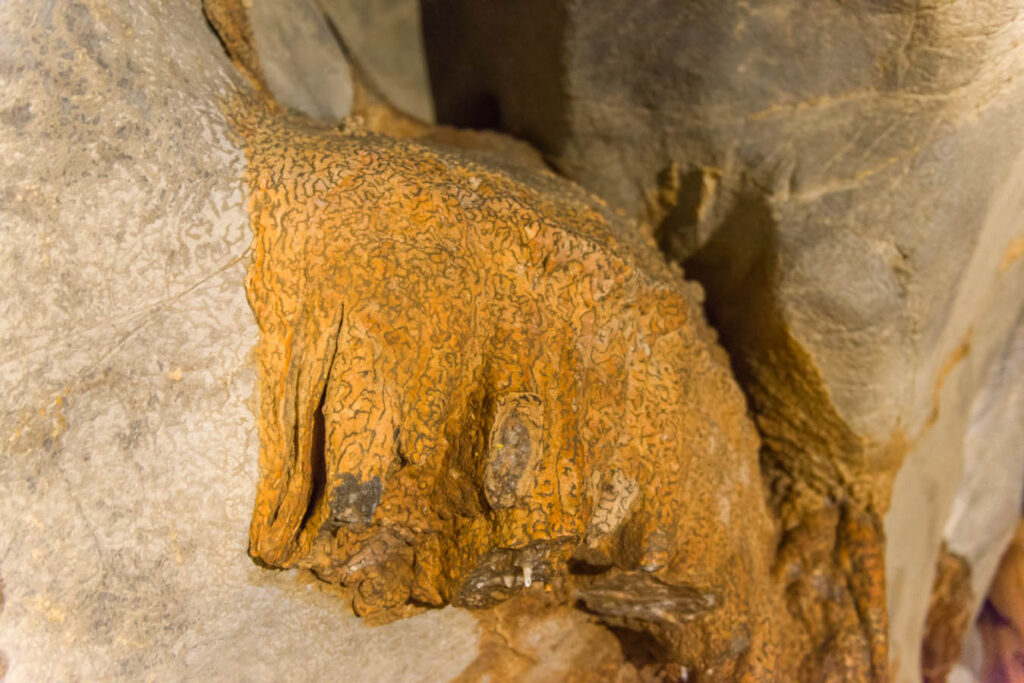
While you walk through the caverns, you will most likely be so enthralled about looking at and for soldier’s signatures that you won’t see all of the really interesting formations in the cave. However, your tour guide will do their best to draw your attention to everything there is to see in the cave, including a really interesting type of bacteria that forms to look like leopard skin.
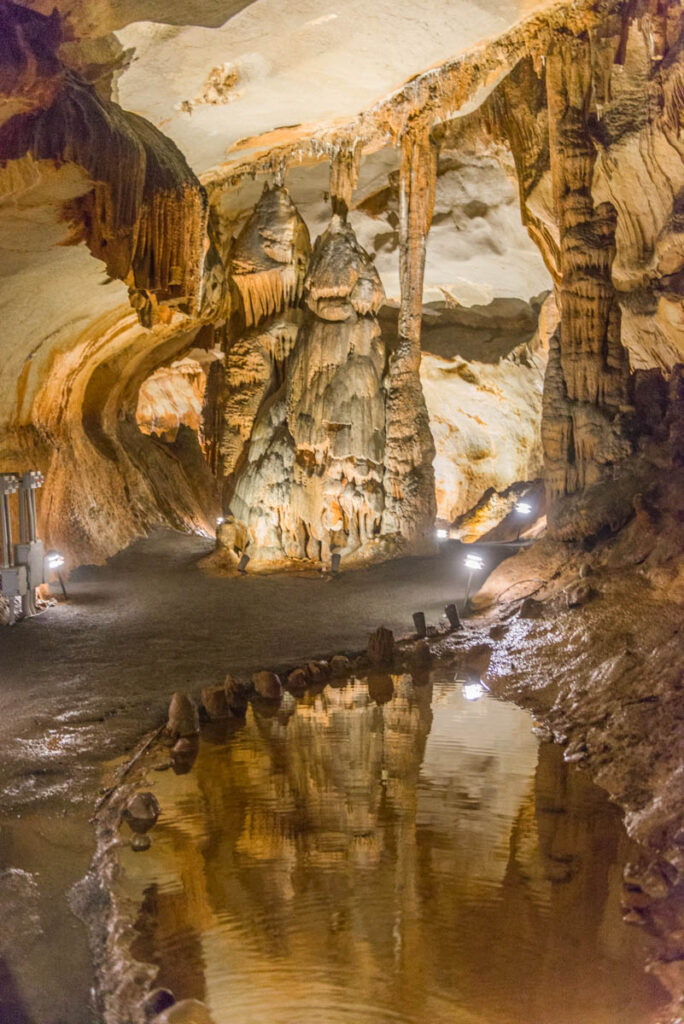
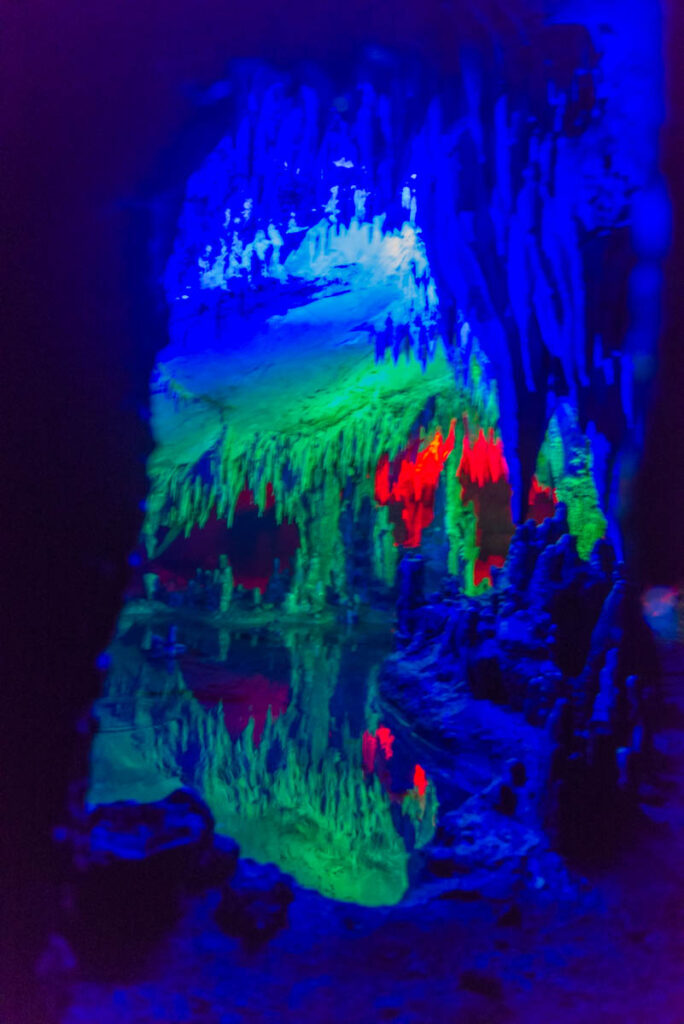
Every cave has to have an underground lake lit up with brightly colored lights, and Melrose Caverns did not disappoint!
NATIVE AMERICAN HISTORY
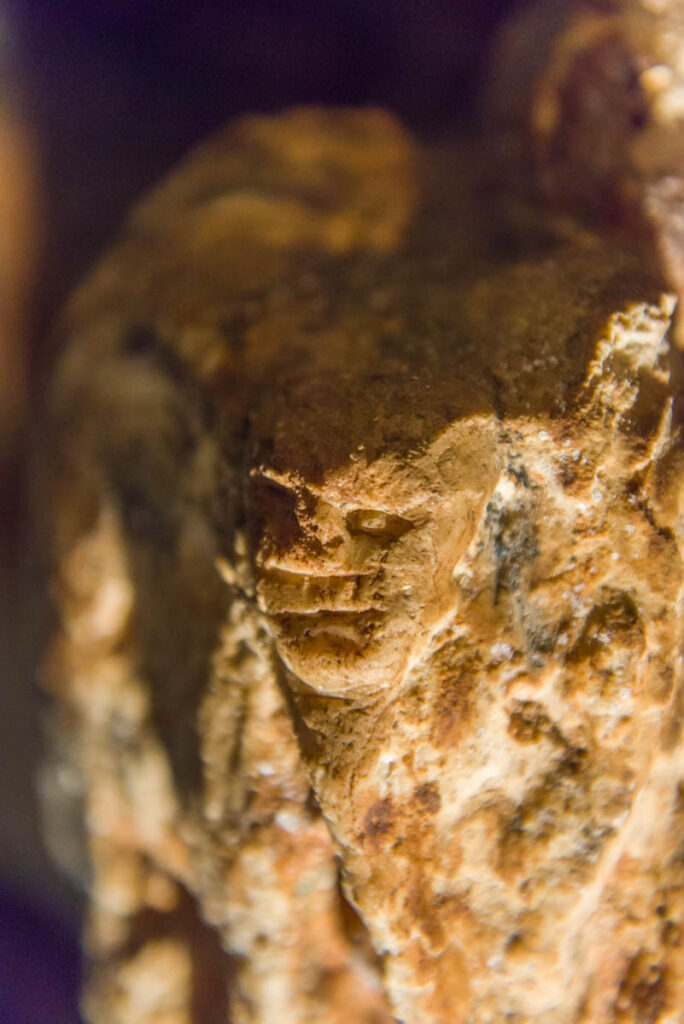
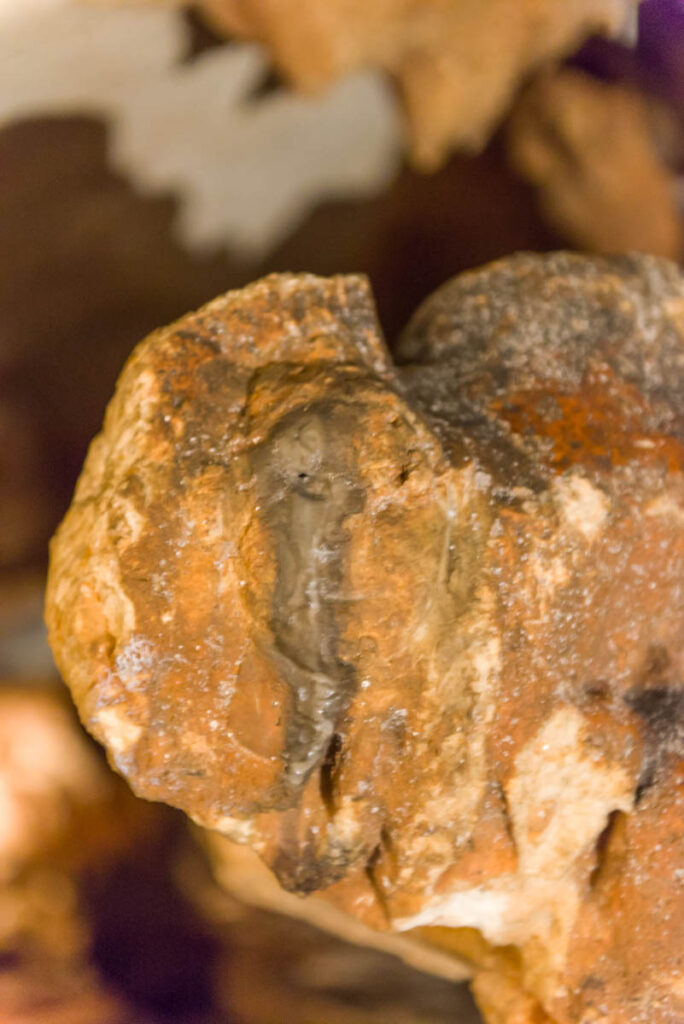
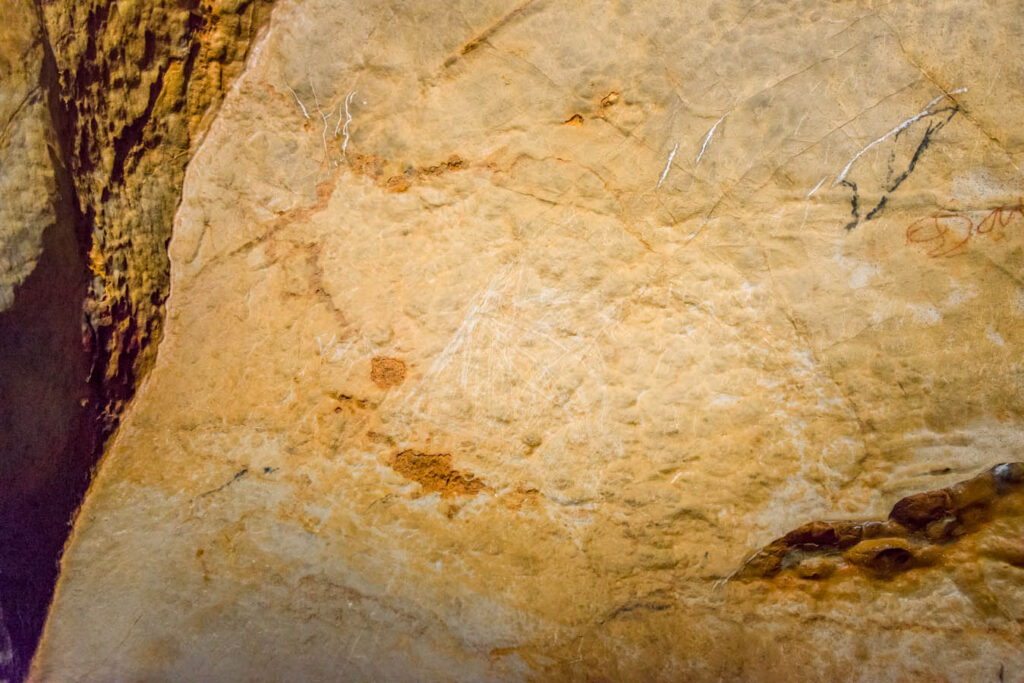
During our tour Matt also pointed out two Native American carvings of faces, along with an alcove where Native American artifacts and human remains were discovered. It is believed that the first Native Americans discovered the caverns around 300 AD. Now to be honest, I would have just walked by both of these carvings without giving them a second thought. It makes me wonder who discovered what made someone stop and say “Hey, look at this Native American carving of a head!”
CIVIL WAR SIGNATURES
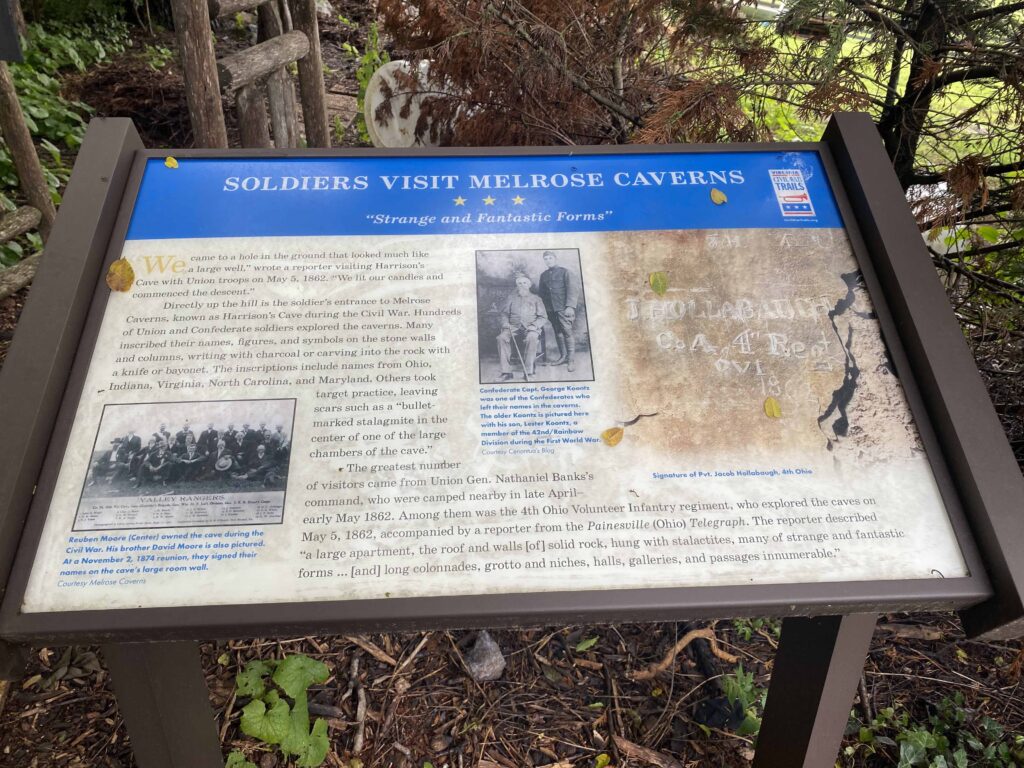
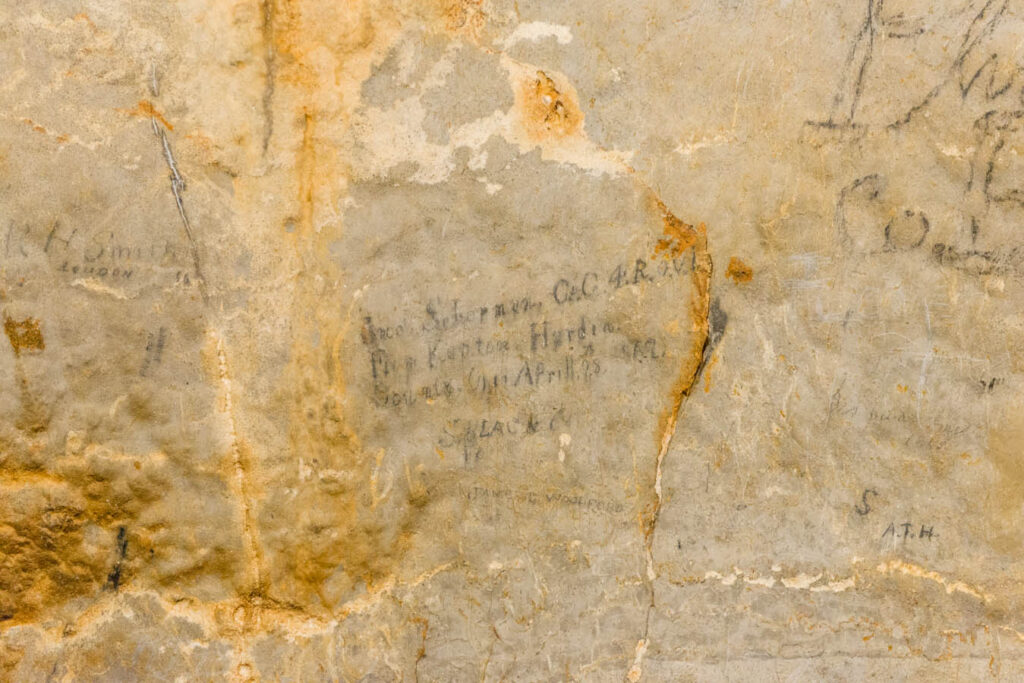
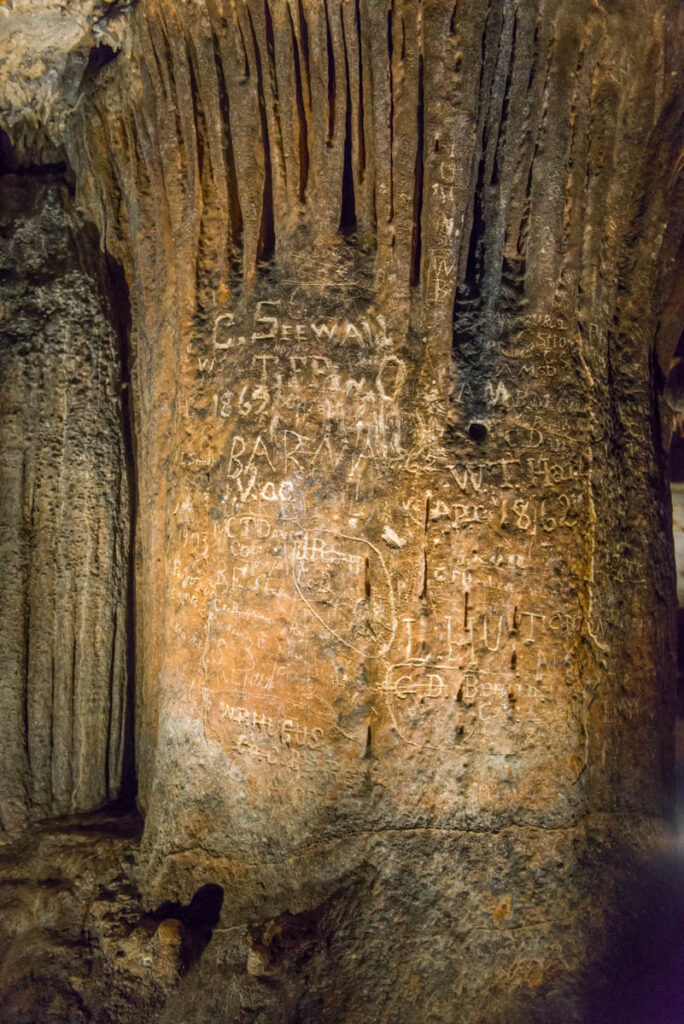
But now to talk about my favorite part of the cave…the graffiti! It is estimated that there are around 400 names written throughout the cavern, the majority of the signatures from 1862. In April of that year Union soldiers under the command of General Nathaniel Bank were looking for a place to rest and store ammunition on the way to Gettysburg. We can imagine they discovered a hole in the ground with cool air rising from it and decided to investigate. They discovered a vast underground cave system to store their supplies, ammunition and sleep.
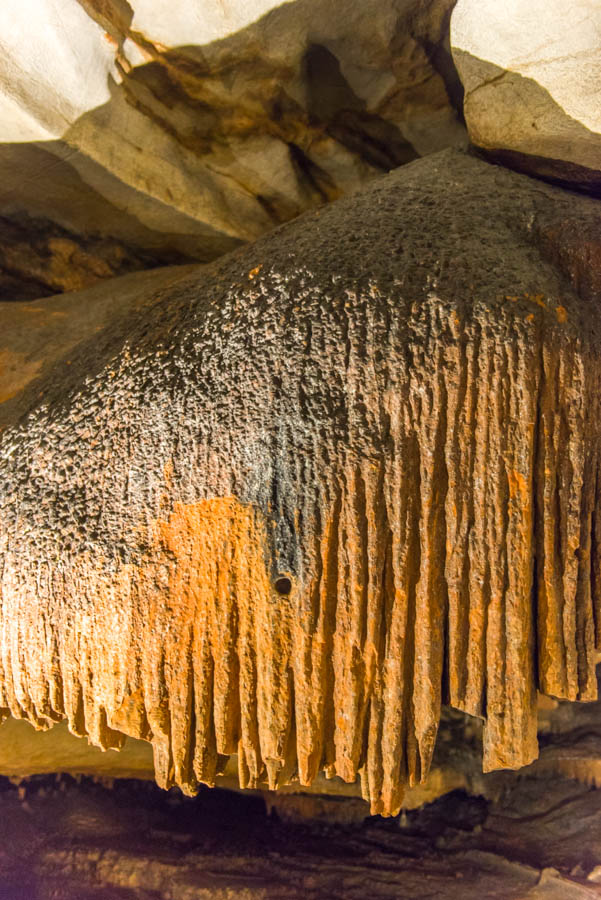
There is also evidence that they might have gotten bored at times. There is a stalactite column bearing pockmarks that researchers suspect the soldiers used for target practice.
Once question that popped into my mind shortly after we started our tour was what did the soldiers do for ventilation. The smoke from their torches surely would have eventually suffocated them out. Well, our tour guide was more than happy to not only tell us what they did, but show us. You can also see the holes the soldiers left when they drilled holes to hold torches and these holes were set right next to natural ventilation areas so the smoke would be sucked out of the cavern.
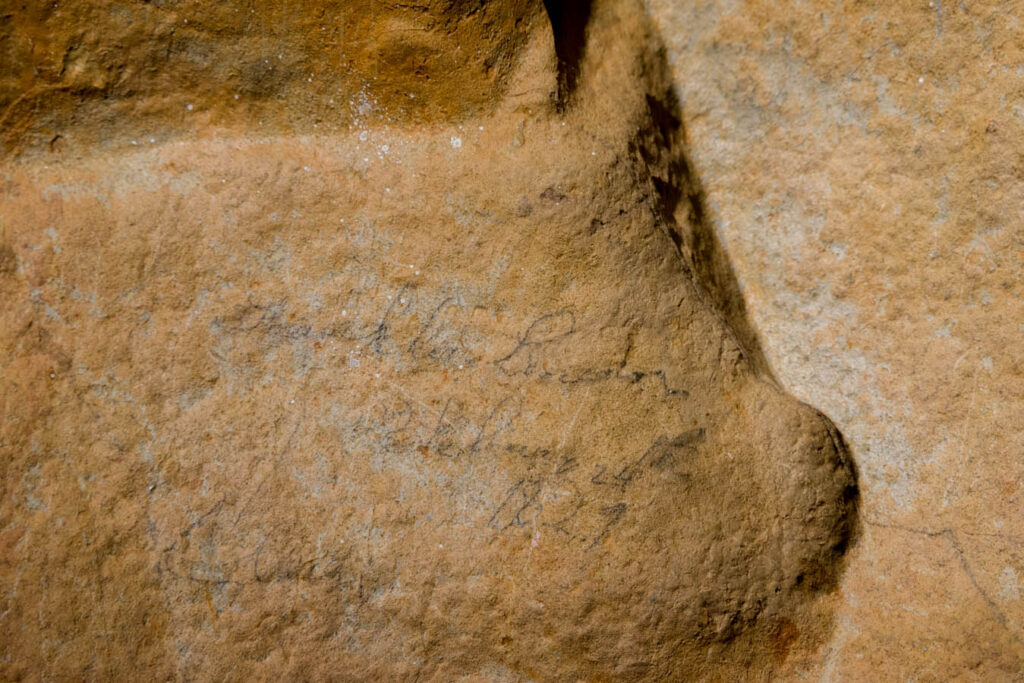
Soldiers weren’t the only ones to leave their signatures on the wall of the caverns. Back in 1829 a relative of Abraham Lincoln who lived nearby left his name in the cave as well. Interestingly, he later joined the Confederate Army to fight against the Union forces headed by his own cousin.
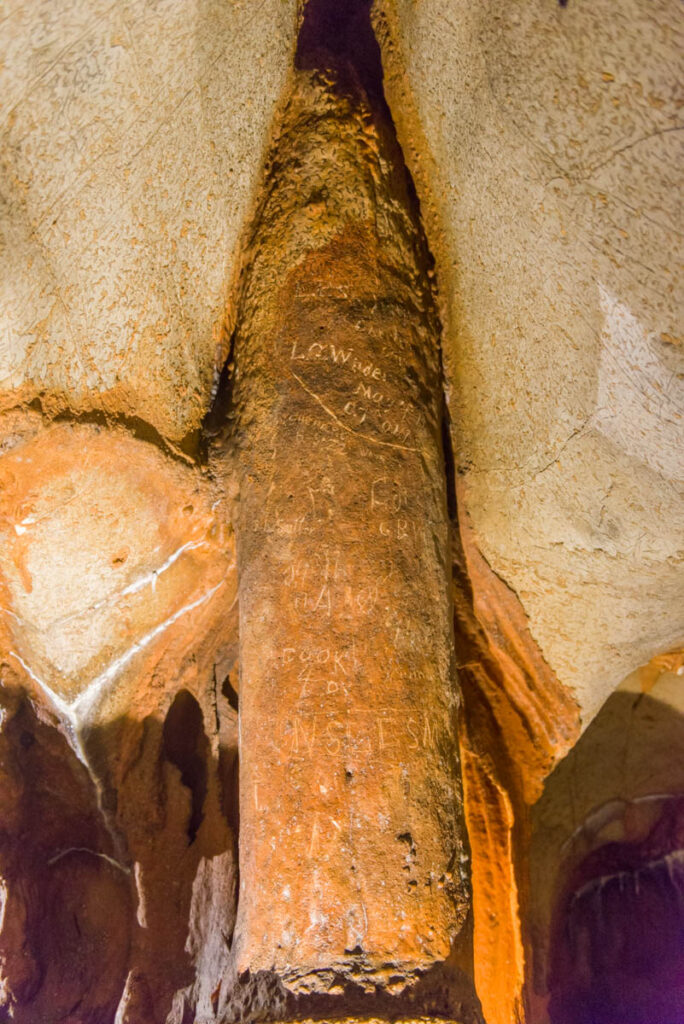
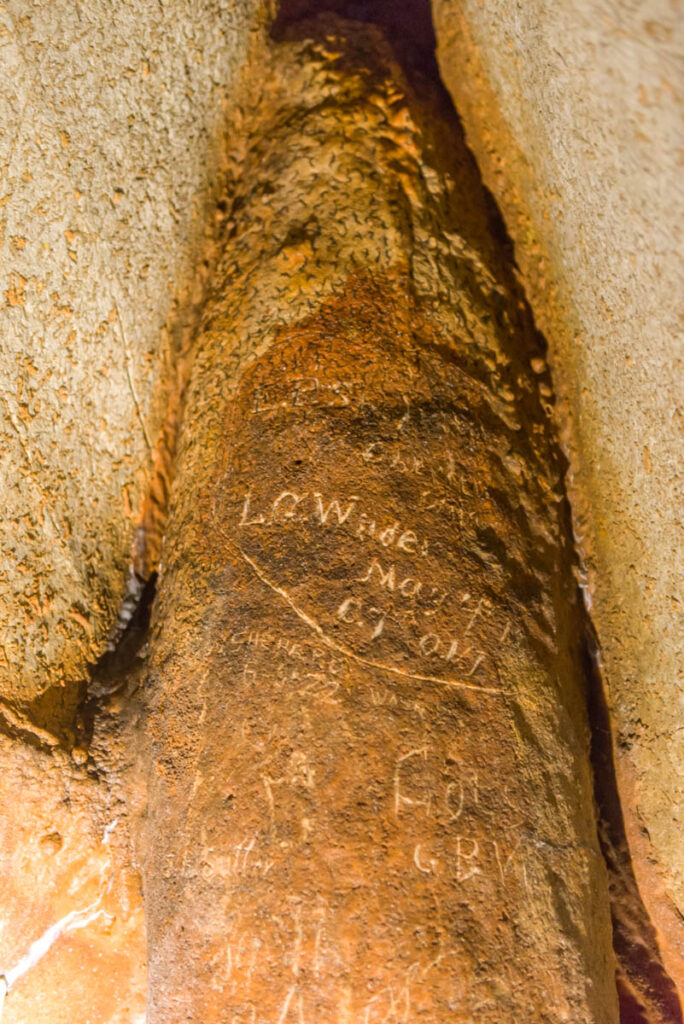
During the tour Matt also pointed out a two really cool columns that were filled with various signatures.
Do you see the name closest to the top of the column on the right? Matt shared with us a slightly sad story. Through reading journal entries, researchers discovered that these two men became friends here in the cave and died during the Battle of Gettysburg.
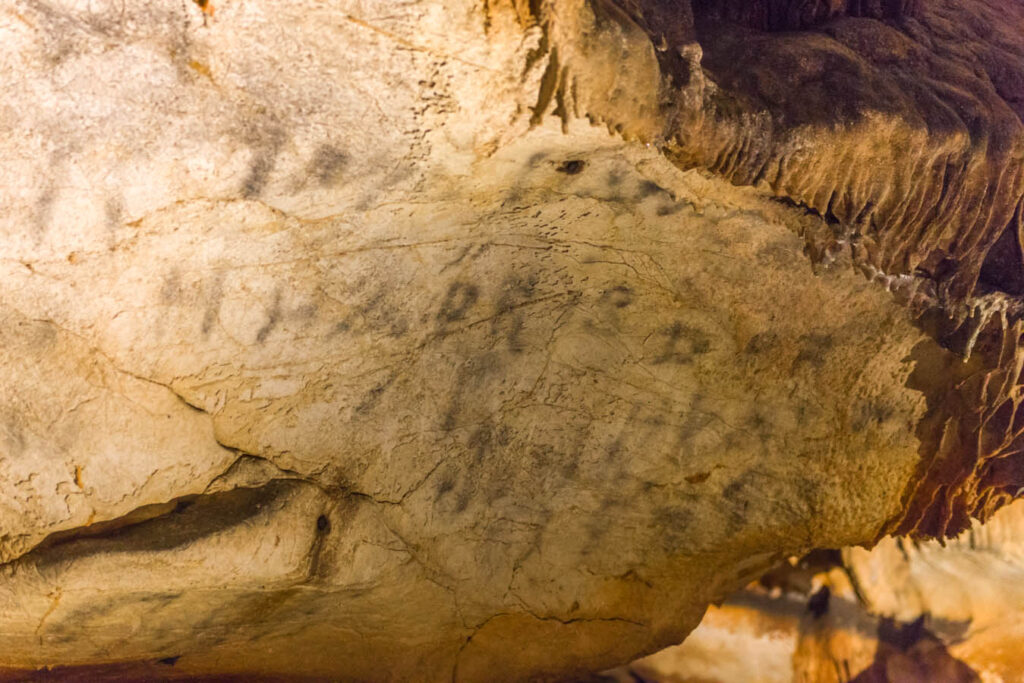
This is an area where they believe soldiers signed while they slept.
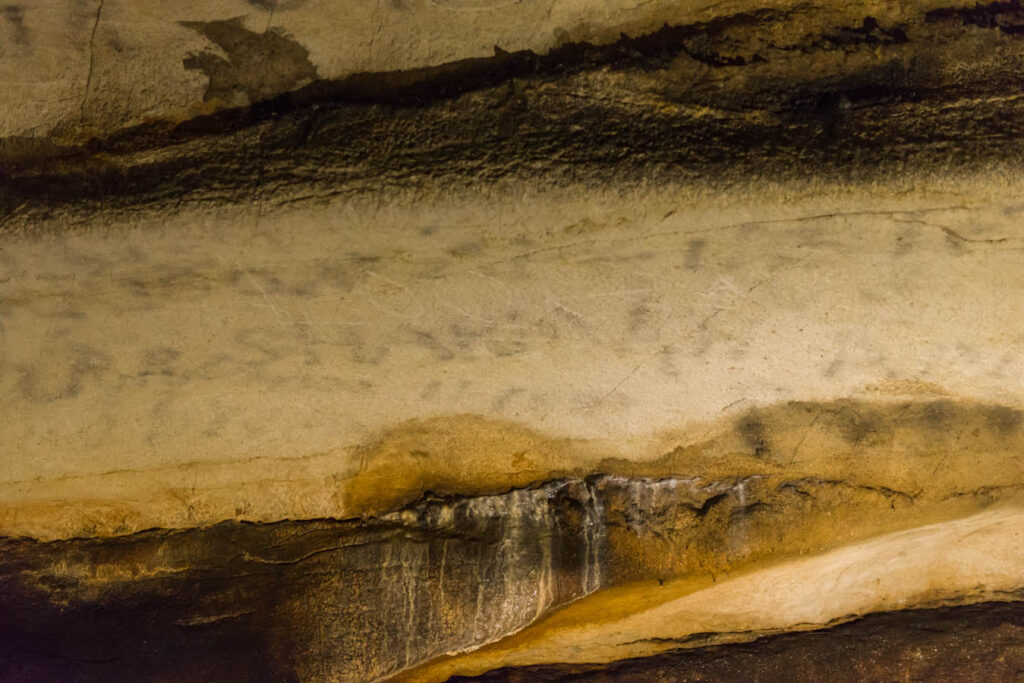
Matt also pointed out a really funny area of graffiti. Here Confederate raiders tried to cross out some of the signatures left behind by the Union solders.
Unfortunately, Native Americans and Civil War soldiers were not the only ones to leave evidence of their visits to the caves. Matt was really quick to point out that some of the names (mostly written in red like in the upper right hand corner of this photo) are the result of more recent visits by college students from area universities from the 1960 and 1970s after the caverns closed but the buildings on the property were used by the University of Virginia for various events.
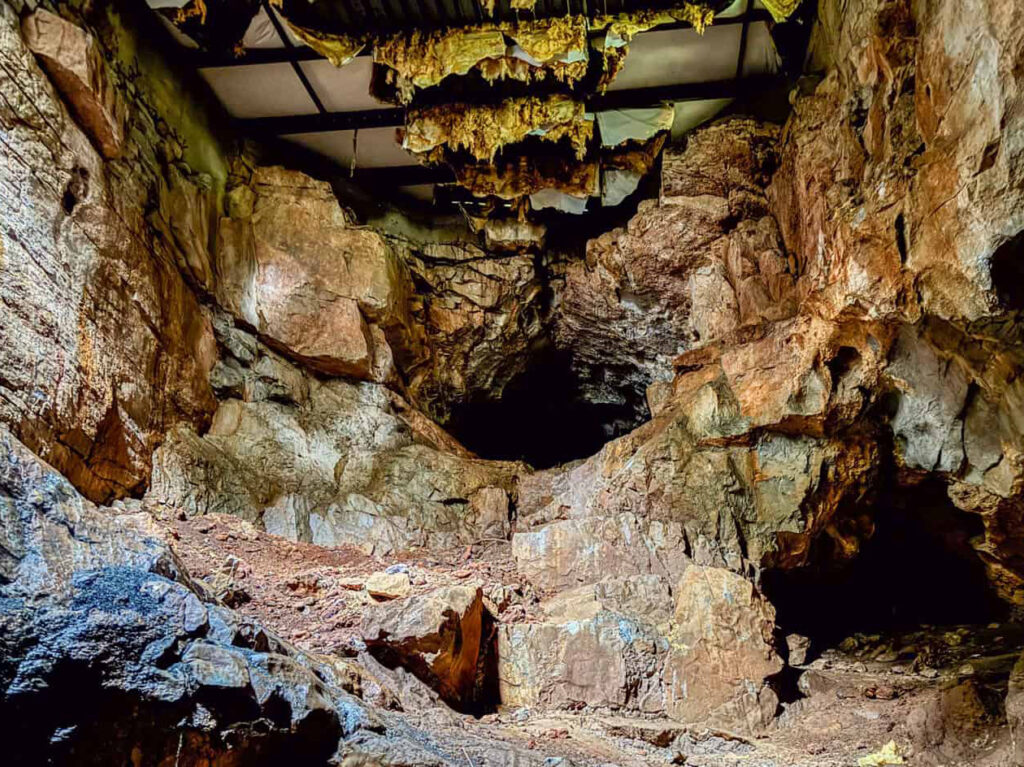
During the tour we also saw a section of the cavern with an interesting history. Originally a sinkhole, a man stumbled upon it and decided to build a hotel over it, using the cool air from the cavern as natural air conditioning. The Great Depression brought his grand plans to a halt. Today you can see the roof that has been placed over the hole to seal it off.
TRAIL TO THE ORIGINAL ENTRANCE
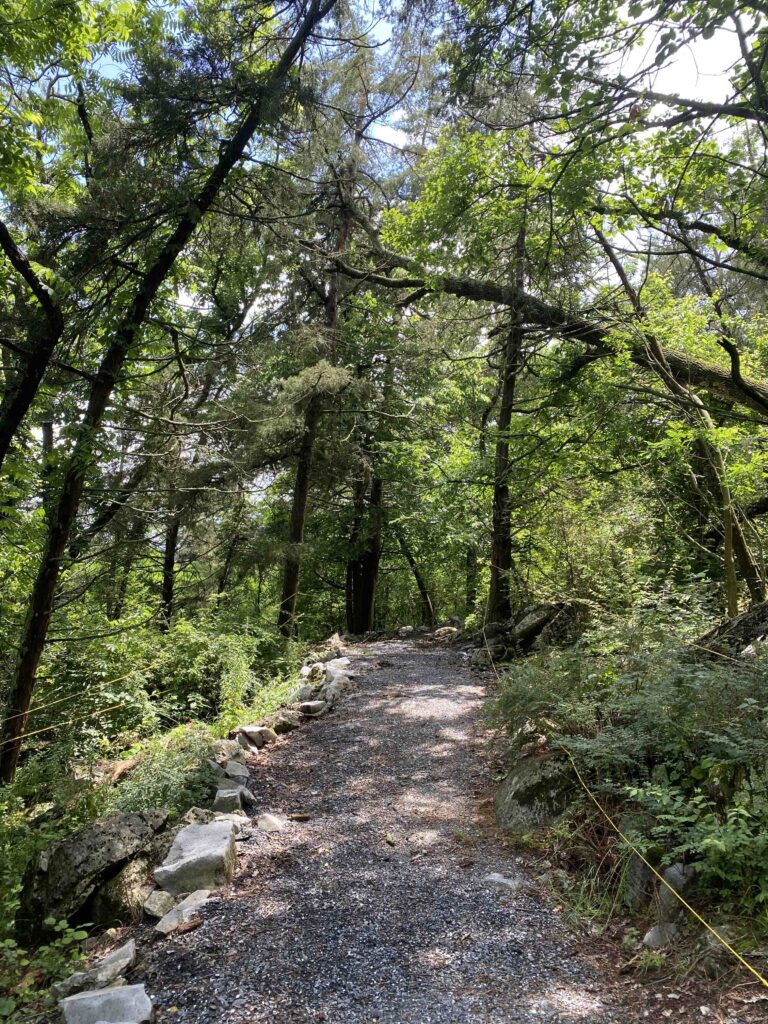
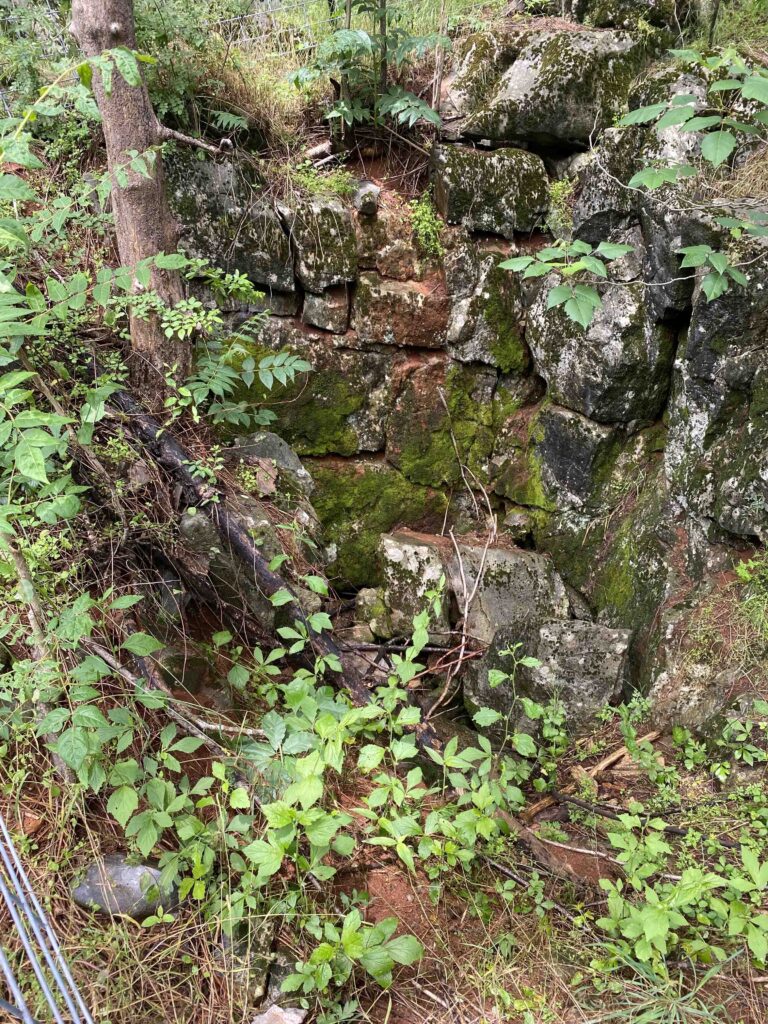
As you walk up the path to the main building you will see the start of a trail. Many times this is roped off, but if you ask they might take down the rope and shut off the electric fence, allowing you to walk the short trail to the top of the hill where you can see the original entrance to the cave. If you have the opportunity to walk the trail, watch out for random piles of cow droppings!
Melrose Caverns is a hidden gem and well-worth a visit. While you can tell it’s definitely a “work in progress” the amount of information you will learn about the geology of the cave along with the human history associated with it makes it stand out among all the other more commercialized show caves. The owners take great pride in the caverns and are restoring them with great respect to both the geological and human history contained within them. The tour guides are personable and friendly. And there is an added bonus of touring a smaller, family run business – depending on the day and time you go, you might just end up being the only one on your tour!
WHAT TO KNOW BEFORE YOU GO
Address: 6639 N Valley Pike Harrisonburg, VA
Website: https://www.melrosecaverns.com/
Hours: The Caverns are open Tue-Sat 10AM-5PM; Sun 11AM-5PM
Admission: $25 online in advance for adults, $19 for kids 6 – 12, Children 5 and under are free. Tickets are more expensive at the door.
Tour Length: 45 minutes – 1 hour.
What to Wear: Light layers or a jacket. The temperature is a constant 55 °F. If it rains, the cavern floods and creates large puddles, so appropriate footwear is recommended
Accessibility: While there are no stairs or steep descents/ascents, the walkways are made of crushed stone and are not ideal for wheelchairs or strollers, especially when it rains.
Restrooms: Yes
Gift Shop: Yes, but like the caverns themselves, it is a work in progress
Food: No, but the grounds are beautiful and the perfect location for a picnic lunch