Picture this: you’re sitting along a quiet little beach, fingers sifting through wet sand and rocks, the sound of waves and laughter from children fade into the background and suddenly you see something black that resembles a shark tooth. You clean it off and hold it up to the sun, realizing that you’re holding a fossilized shark tooth that no one has seen before. That’s the magic of Fossil Beach at Westmoreland State Park!
It may be hard to imagine now, but millennia ago the land that now makes up Virginia, Maryland and the nation’s capital was a warm underwater marine environment that submerged the area during the Miocene Era. Where shopping malls, housing developments and data centers now stand, giant megalodon and other species of sharks once hunted down prehistoric whales and dolphins and fish darted through coral. As the waters receded, preserved remains of these ancient creatures were left behind.
A trip to Fossil Beach has always been on my bucket list for a while after the recommendation from a friend a couple of years ago. She and her daughter have gone several times with both their scouting group and homeschool group. However, as with many things in life I kept saying to myself “I need to go there someday” and someday never happens. But this past May I decided that I wanted to spend Mothers Day looking for shark teeth so that’s what we did.
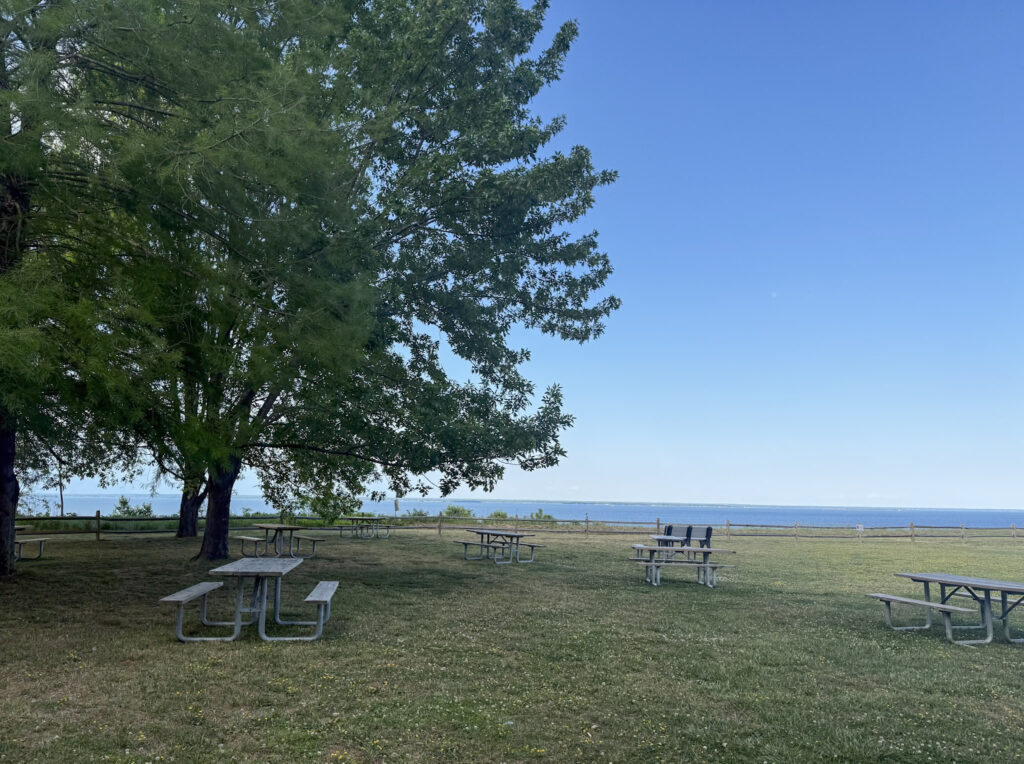
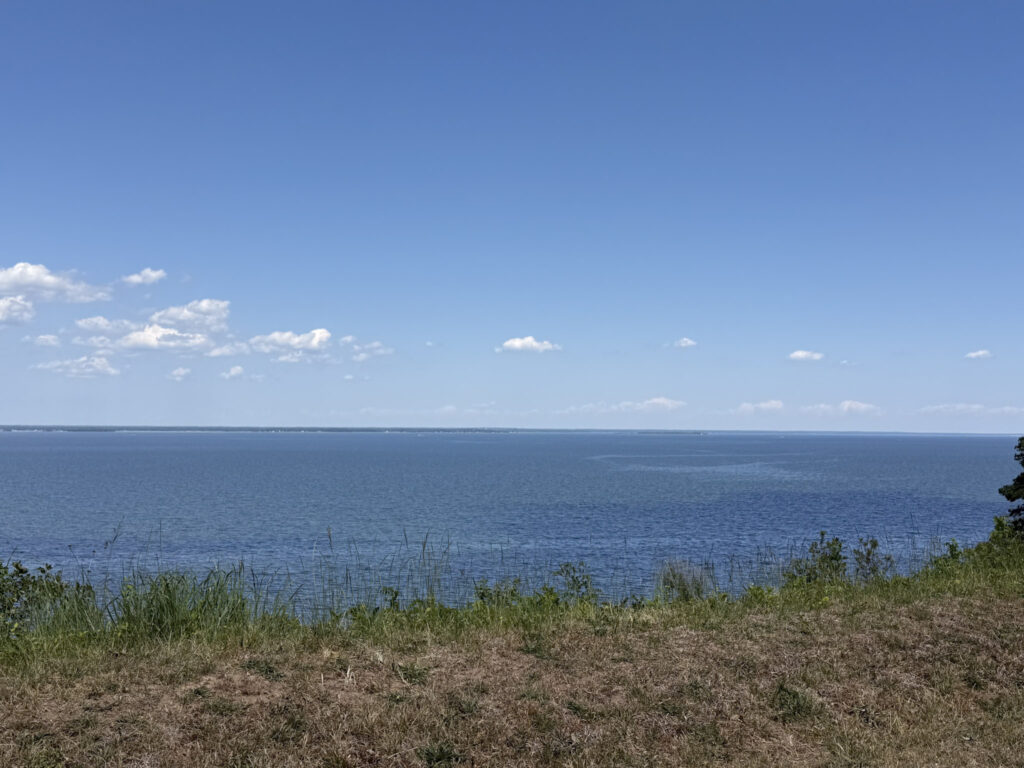
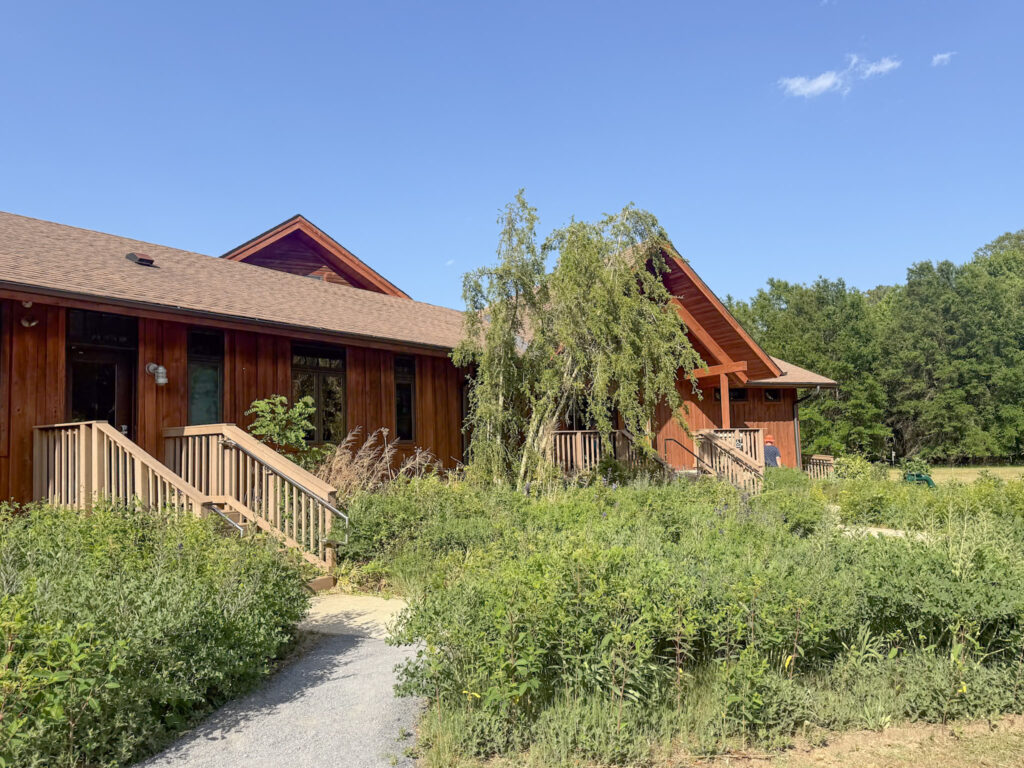
We started our adventure off with a picnic lunch behind the visitors center. Even though there was a good amount of cars in the parking lot and people walking in and out of the visitors center, we were the only ones in the picnic area. We were not complaining – it gave us the opportunity to we enjoy our lunch listening to the birds singing while watching the activity along the river below.
Checking Out the Visitors Center
After we finished our lunch we headed into the visitors center to use the bathrooms and look around. There were some cute souvenirs and educational exhibits about the park’s geology, wildlife, and fossil history. There was also a couple of ambassador reptiles like turtles and a corn snake. On the way our we saw this handy shark tooth identification chart that I snapped a picture of for future use.
The Hike to Fossil Beach
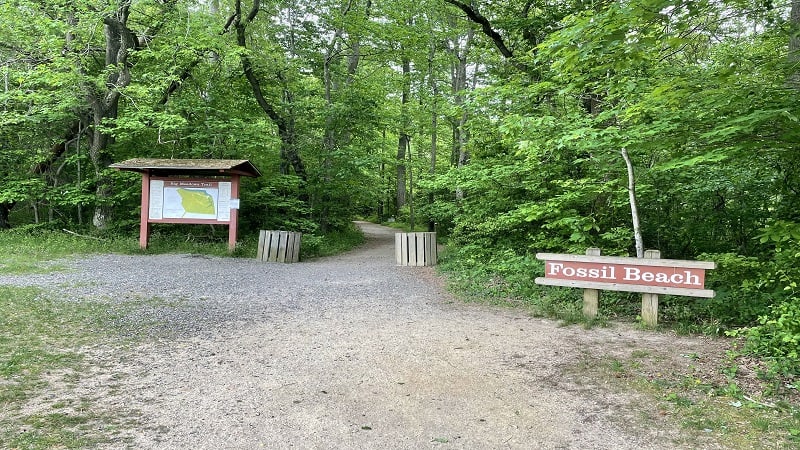
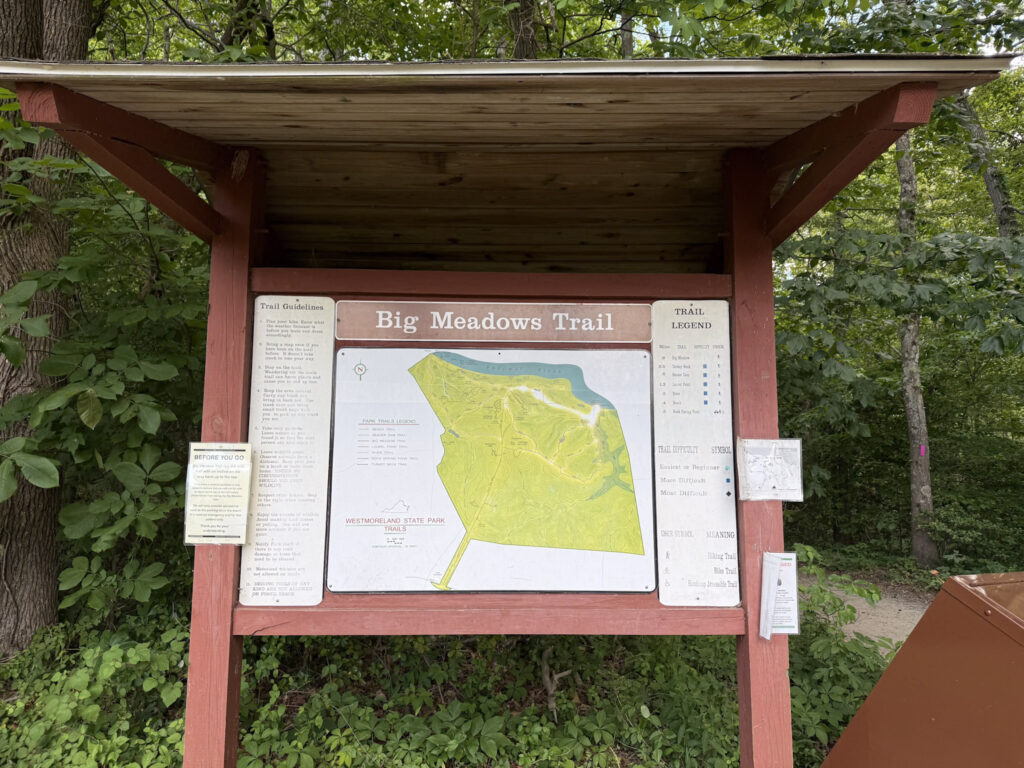
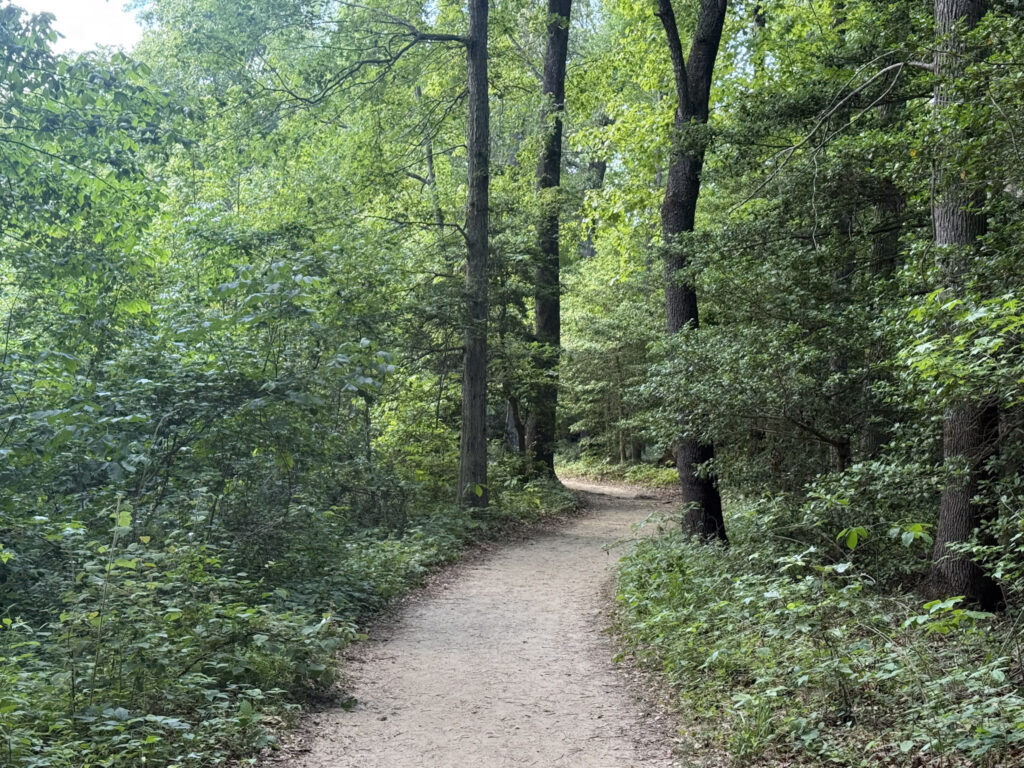
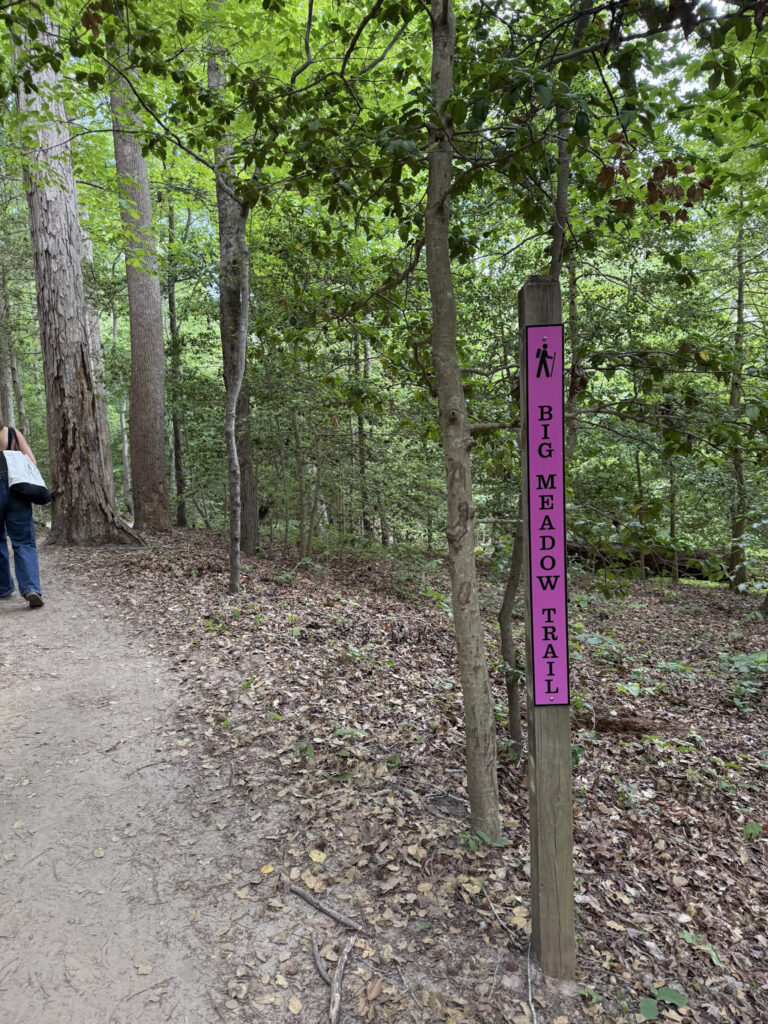
With a large trail kiosk and a big sign that reads “Fossil Beach” it’s hard to miss the entrance to the trail. The 0.6 mile trail winds downhill at leisurely pace, making it a relatively easy hike for people and children of all ages. The well-marked trail winds through a serene forest before opening up to the riverfront.
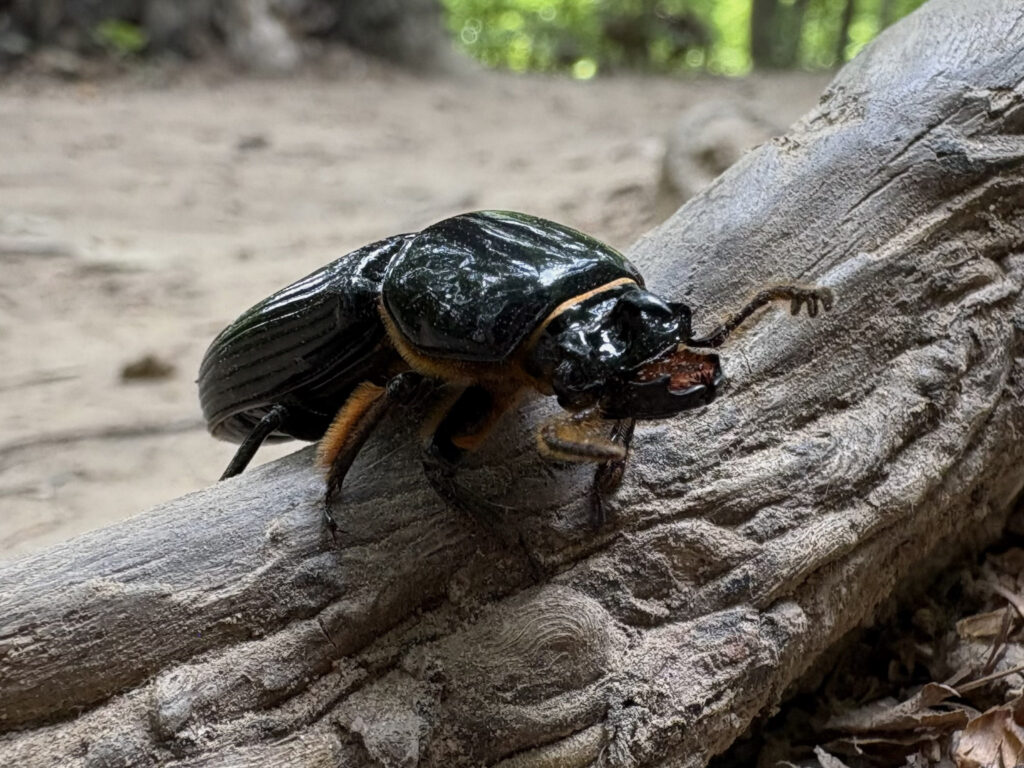
Even though it was a short walk, we are always looking for interesting things, especially animals and bugs. Along the way we found this really cool beetle which I discovered later on is a member of the Passalidae family of beetles known variously as “bessbugs”, “bess beetles”, “betsy beetles”, “betsy bugs”, or “horned passalus beetles. Even though they look terrifying, they are harmless to humans and are super important to our ecosystem as decomposers
Time To Fossil Hunt!
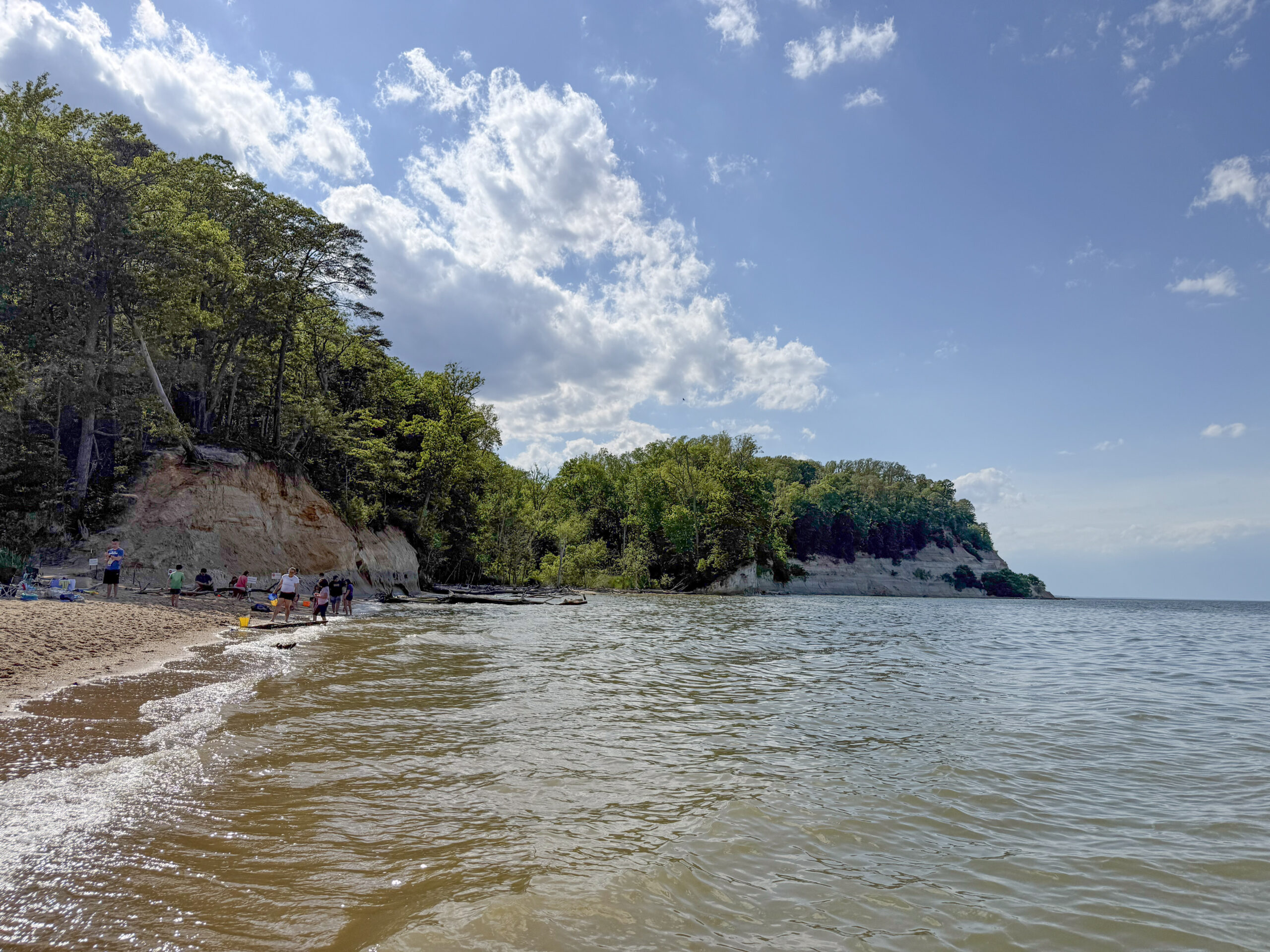
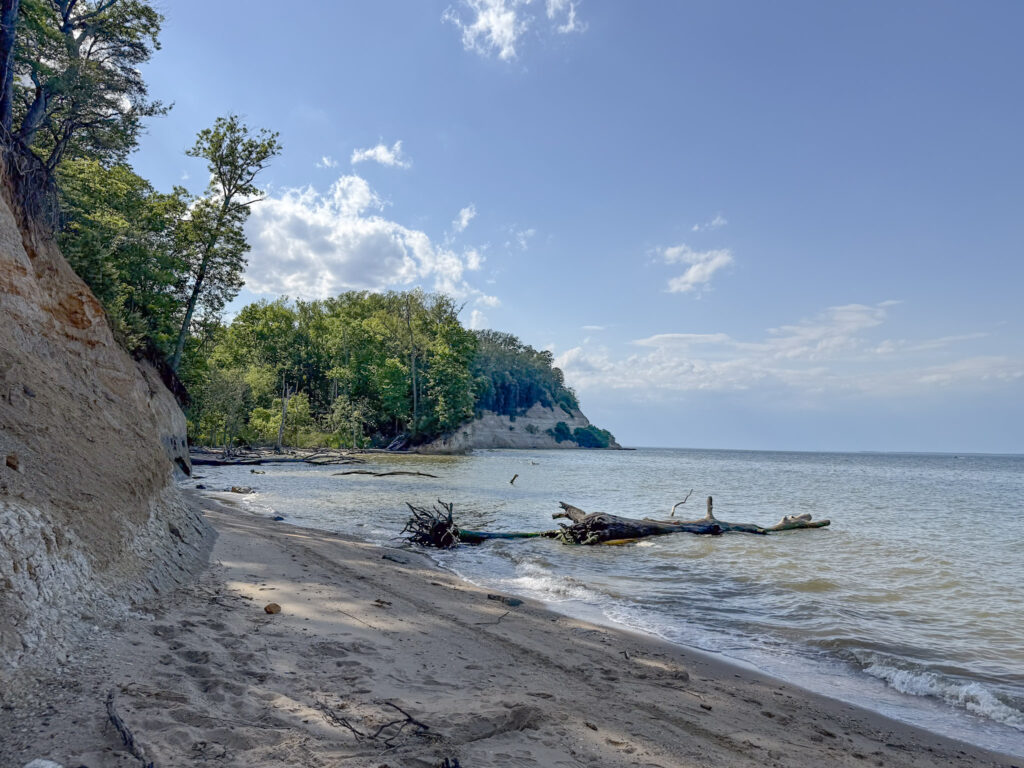
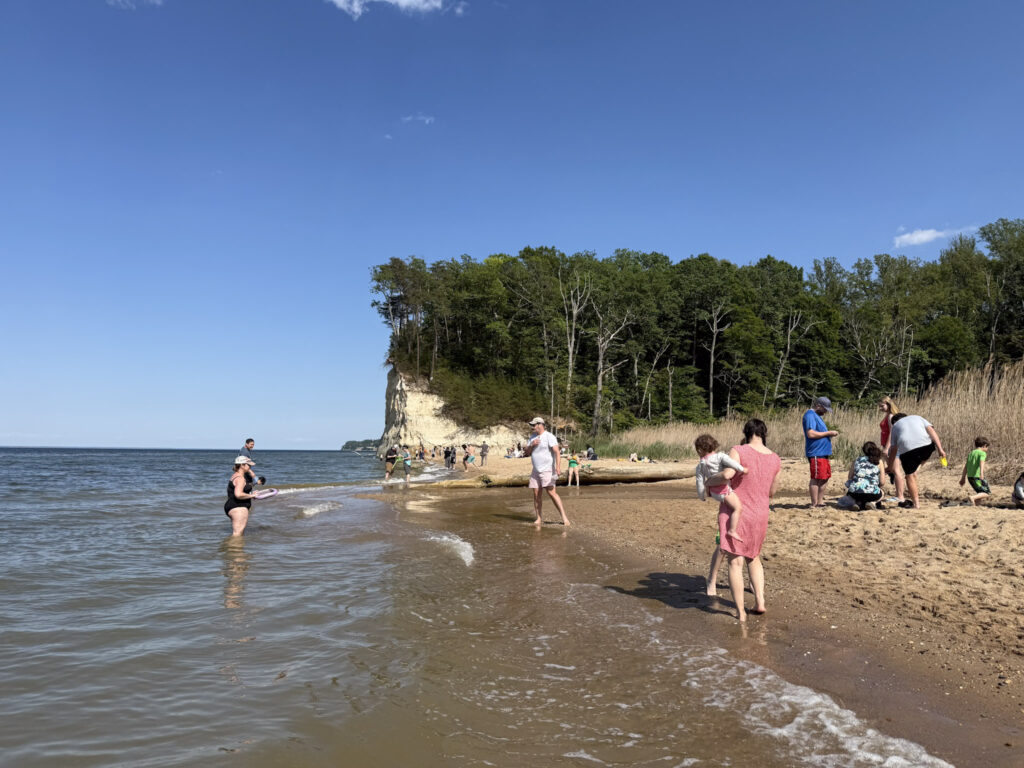
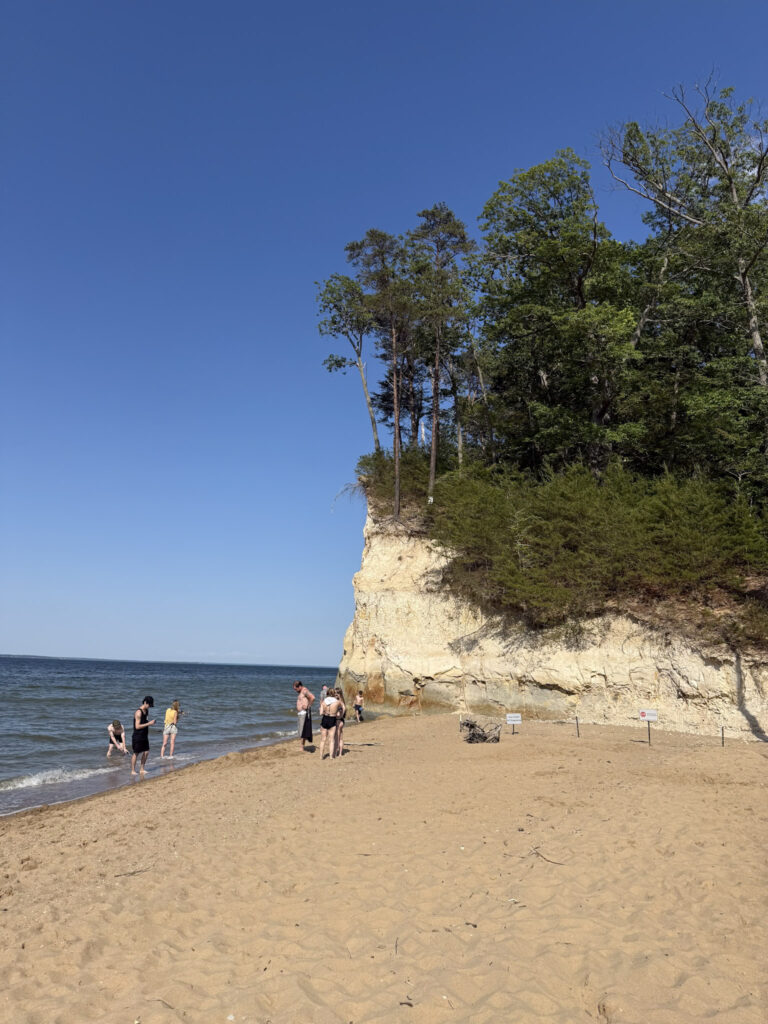
At the end of the trail we found ourselves at the beach. And what a beautiful beach it is! The left side of the beach is closed to visitors.
So all of the action takes place to the right.
By this point you might be wondering why are there so many shark teeth are found here. The beach sits at the base of Horsehead Cliffs, where wind and the water from the Potomac River steadily erodes the ancient sediment cliffs and deposits fossils right onto the shoreline. Shark teeth are considered the most common vertebrae fossil to find thanks to sharks’ natural process of growing and losing teeth at an astonishing rate. Depending on the species, a single shark can lose an average of 30,000 teeth over the course of its lifetime. Multiply that by millions of sharks over millions of years…and that’s a lot of teeth!
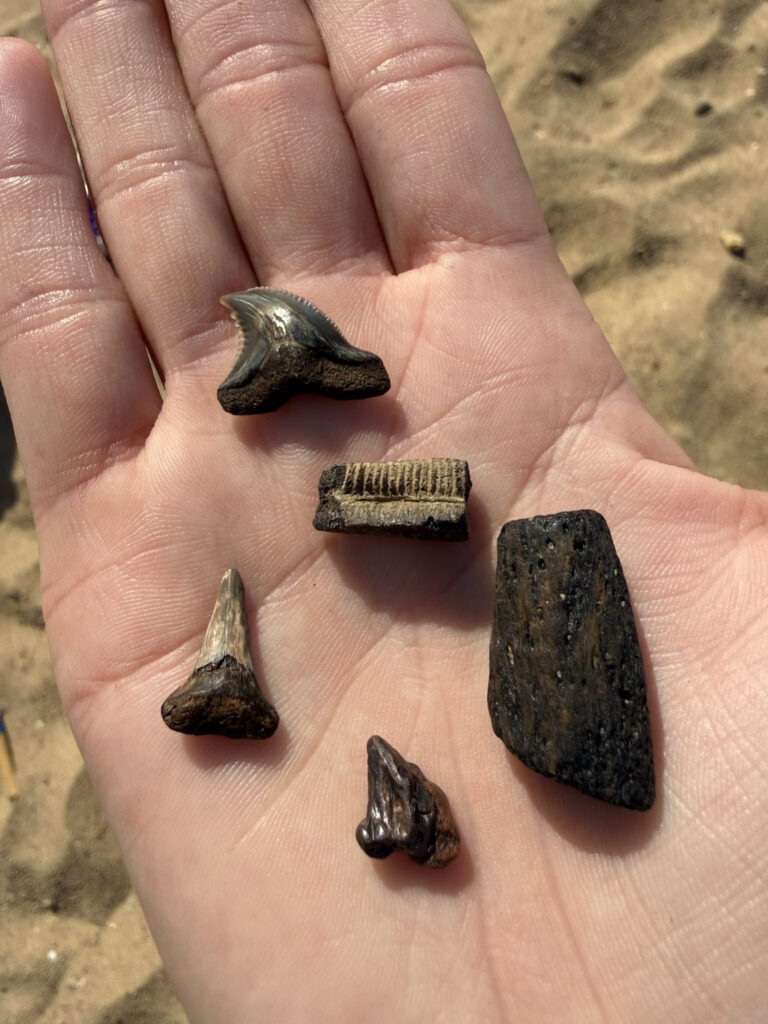
Even though shark teeth are the star attraction, you can also find fragments of ray jaw bones, whale bone fragments, and the occasional shell fossil if you look carefully enough. A good rule of thumb is to bring home anything you think looks interesting and then do some research later to identify it later. Two good websites to consult are the Fossil Forum and the Fossil Guy.
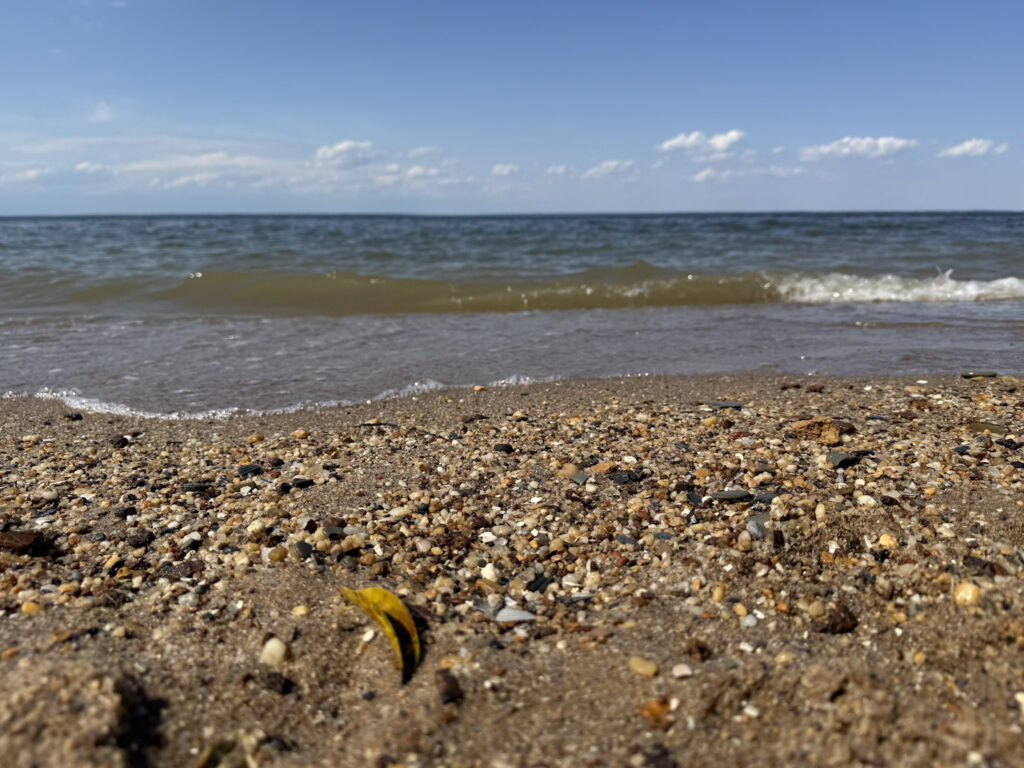
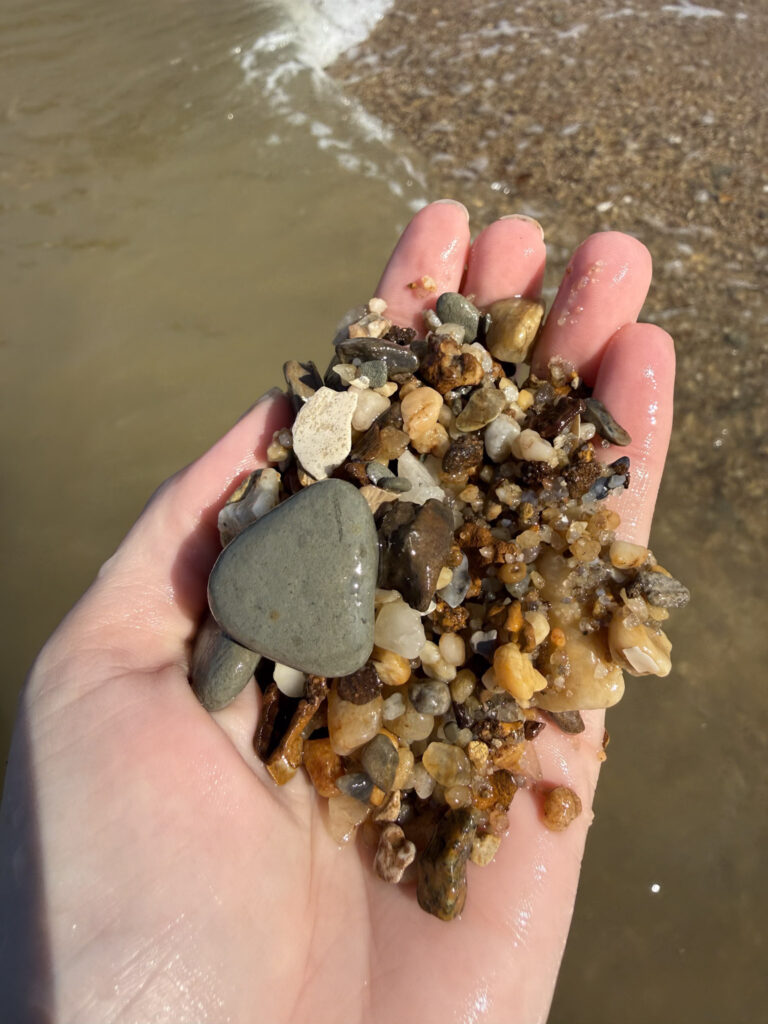
We found a spot close to the cliffs to set our bags down, then we got to work looking for fossils. The water was a bit chilly but I didn’t care – there were shark teeth to find! One thing I learned very quickly is that fossil hunting takes patience. I also learned that you have to choose your fossil-hunting grounds wisely. I dug for a while through the dry sand and then scooped up handfuls of sand from underneath the waves, but I had my best luck along the areas of the beach where the waves met the shoreline, since the constant water movement deposits new treasures regularly.
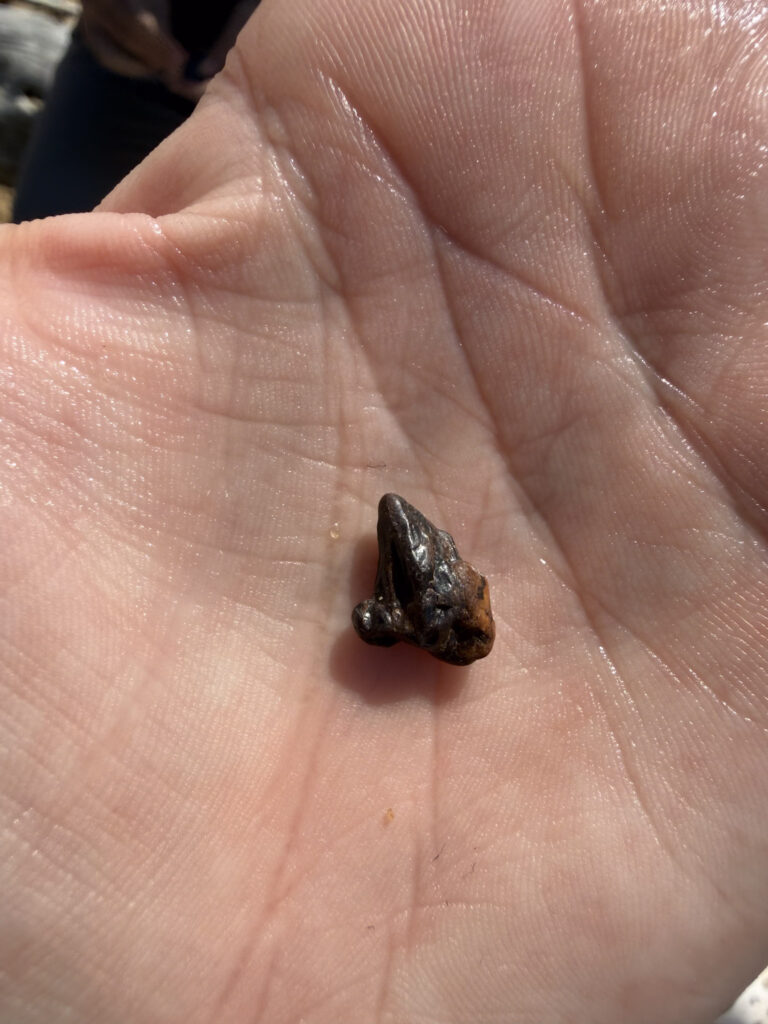
But back to the part about patience. I knew from my friends experience that I was looking for anything black, since ancient shark teeth turn black during the fossilization process. At first I didn’t find anything as I I slowly made my way down the shoreline, stopping to scoop up piles of shells and rocks and sort through them. Then all of a sudden I found my first tooth!
I was so excited that I ran up to Peter and Emma like a little kid and after showing them snapping a picture to my friend, I put it carefully away in a plastic container in my tote bag. With newly-trained eyes I continued the hunt while my family waited patiently for me to get tired. In all we spent about two hours here and I walked away with a nice haul of teeth, a ray bone, and something that could be fossilized bone. We weren’t sure so we brought it home anyways! Not bad for my first time!
INSIDER TIPS FOR FINDING SHARK TEETH
I am no expert fossil hunter yet, but here are some things I learned after my first visit:
Bring a small shovel to dig in the sand and a small sifter for filtering the sand (a kitchen colander or fine mesh strainer work just fine)
Pack plastic bags or buckets to store anything you find
Wear hard-soled sandals or water shoes so you can walk in the water and along the rocky shore without discomfort
Choose your fossil-hunting grounds wisely – concentrate on areas along the beach where the waves meets the shore – the constant water movement deposits new treasures regularly.
If possible, plan your visit at low tide, as that’s the best time to find shark teeth and fossils.
Don’t give up – you might not find many fossils on your first visit but with practice (and patience!) you’ll find more each time you visit. No matter what you find (or don’t find) simply looking for shark teeth is a captivating activity!
If you can, visit during the week when there are less crowds
Planning Your Trip to Westmoreland State Park
Has reading this inspired you to make your own trip out to Fossil Beach? If so, here’s what you need to know!
Plan Your Visit:
Address: 145 Cliff Road, Montross, VA 22520
Hours: Dawn to dusk, but the visitors center is open 10:00am – 5:00pm.